You found 653 house plans!


2-Story Cottage House Plans
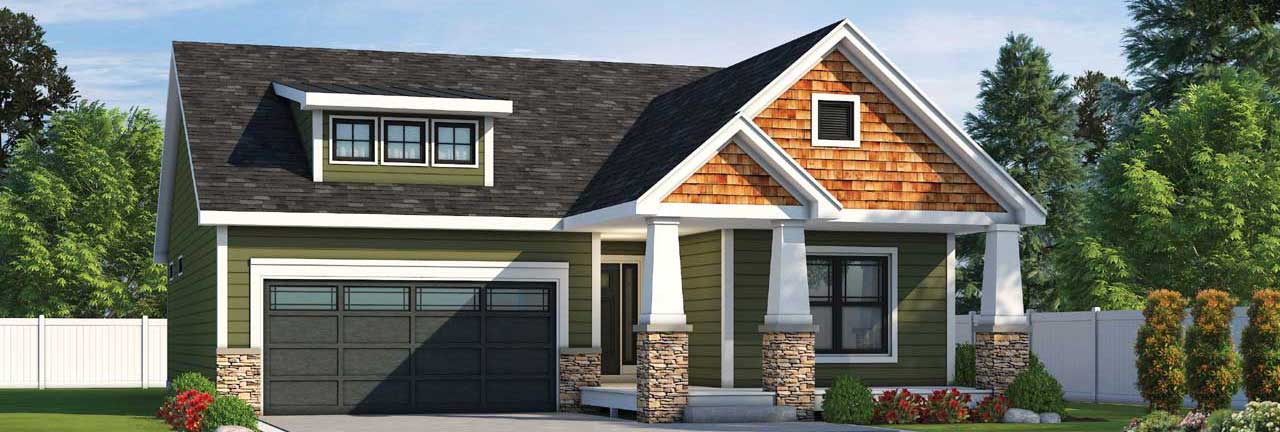
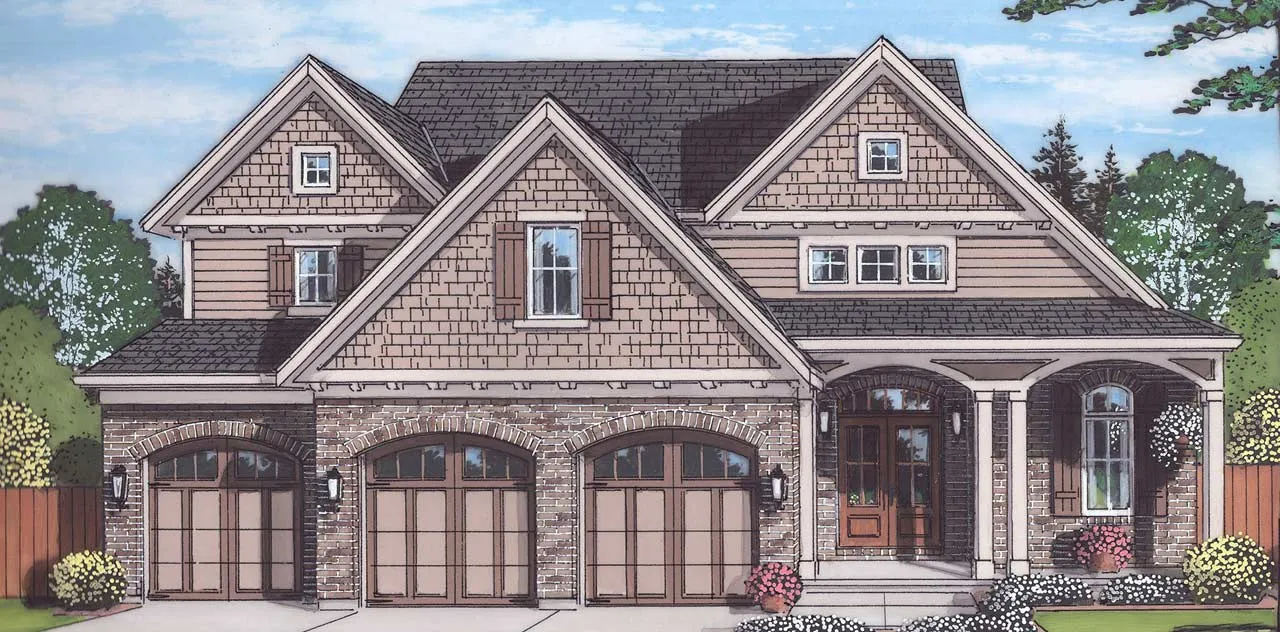
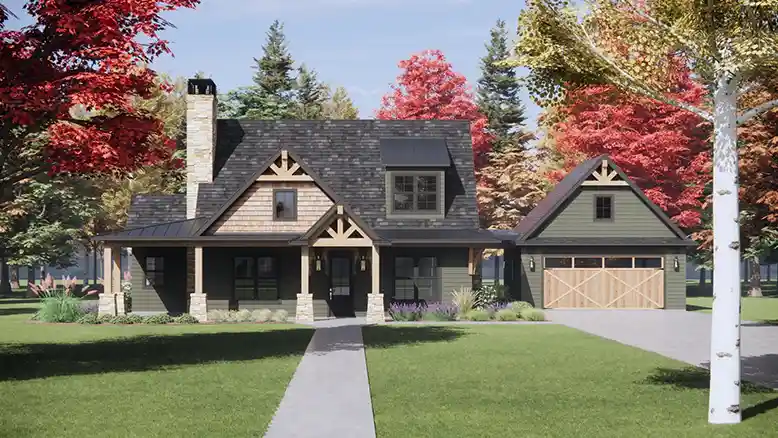
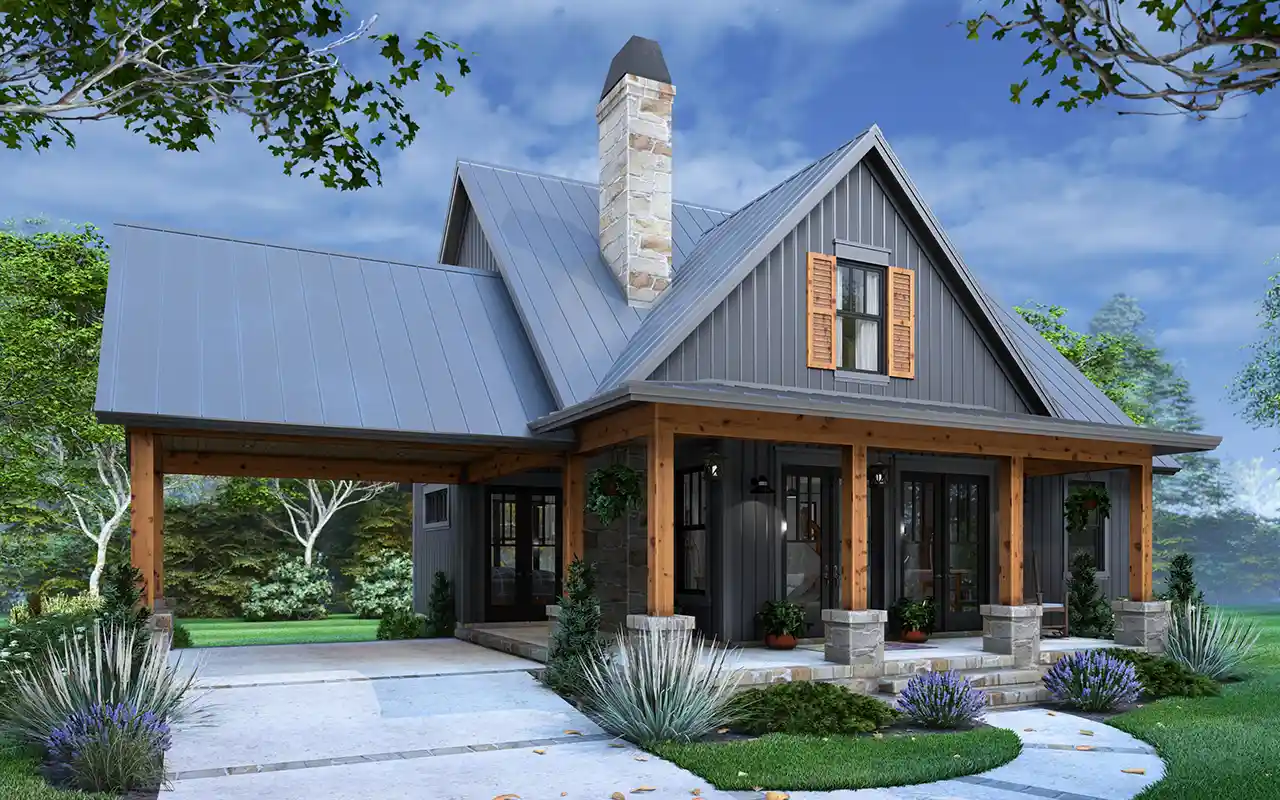
When you need more living space but want to keep the footprint compact, 2-story cottage house plans offer the best of both worlds. Building up rather than out lets you fit more bedrooms, bathrooms, and flexible spaces into a home that still sits comfortably on a modest lot. And because the cottage style has always been defined by proportion and detail rather than sheer size, a second story feels like a natural extension of the design.
Read More

- 2 Stories
- 2 Beds
- 2 Bath
- 1388 Sq.ft

- 2 Stories
- 4 Beds
- 3 Bath
- 2025 Sq.ft

- 2 Stories
- 5 Beds
- 3 Bath
- 3 Garages
- 2615 Sq.ft

- 2 Stories
- 2 Beds
- 2 - 1/2 Bath
- 1 Garages
- 1379 Sq.ft

- 2 Stories
- 2 Beds
- 2 - 1/2 Bath
- 1500 Sq.ft
- 2 Stories
- 4 Beds
- 2 - 1/2 Bath
- 3 Garages
- 2600 Sq.ft

- 2 Stories
- 3 Beds
- 2 Bath
- 1250 Sq.ft
- 2 Stories
- 3 Beds
- 2 - 1/2 Bath
- 2 Garages
- 2115 Sq.ft

- 2 Stories
- 2 Beds
- 2 Bath
- 1000 Sq.ft

- 2 Stories
- 2 Beds
- 2 Bath
- 2 Garages
- 1035 Sq.ft

- 2 Stories
- 2 Beds
- 1 Bath
- 705 Sq.ft

- 2 Stories
- 3 Beds
- 3 - 1/2 Bath
- 3 Garages
- 3230 Sq.ft

- 2 Stories
- 3 Beds
- 2 Bath
- 1372 Sq.ft

- 2 Stories
- 1 Beds
- 1 Bath
- 619 Sq.ft

- 2 Stories
- 4 Beds
- 2 Bath
- 2 Garages
- 1428 Sq.ft
- 2 Stories
- 5 Beds
- 6 - 1/2 Bath
- 4 Garages
- 8376 Sq.ft

- 2 Stories
- 3 Beds
- 1 - 1/2 Bath
- 1200 Sq.ft

- 2 Stories
- 3 Beds
- 1 - 1/2 Bath
- 1073 Sq.ft
Why Build a Two-Story Cottage?
The most straightforward reason to choose a two-story cottage plan is space. A second floor can nearly double your living area without requiring additional land. For families who need three or four bedrooms, a home office, or a dedicated playroom, going vertical keeps those rooms within reach while preserving yard space for landscaping, a garden, or outdoor entertaining.
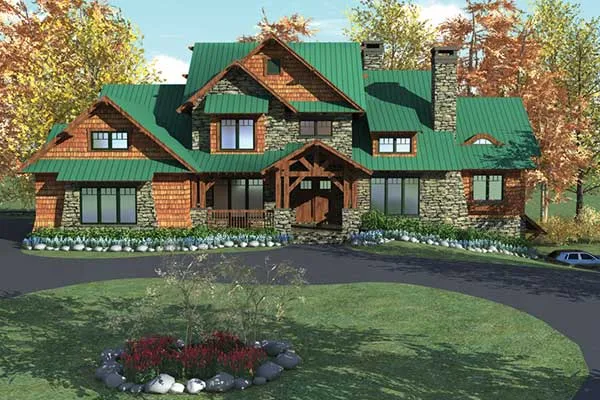
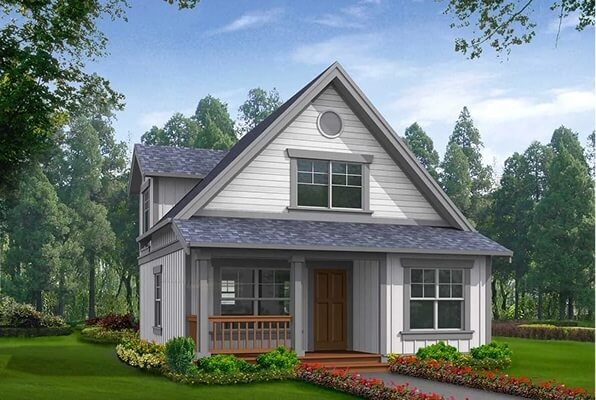
There's also an architectural reason. Cottages have historically featured steeply pitched roofs, prominent gables, and dormer windows. A two-story layout gives those elements room to breathe. The roofline gains height and dimension, dormers become functional spaces rather than decorative accents, and the overall silhouette of the home carries the kind of visual presence that draws you in from the street.
Building costs are another consideration. Because two-story cottage plans share a single foundation and a single roof between two levels of living space, the cost per square foot can be lower than spreading the same area across one level. If your budget needs to stretch further, building up is often the more efficient path.
How Two-Story Cottage Plans Are Typically Laid Out
While every plan is different, 2-story cottage house plans tend to follow a general pattern that keeps daily living on the main floor and private spaces upstairs.
First Floor
The first floor usually centers around an open living area that combines the kitchen, dining space, and great room. This is where the home's social life happens, and cottage plans handle it well with features like exposed beams, a fireplace, and direct access to a porch or patio. You'll often find a half bath, a mudroom or laundry area, and sometimes a primary bedroom on this level as well.
Second Floor
The second floor is where bedrooms and full bathrooms are grouped. In many two-story cottage plans, this level includes two or three bedrooms, a shared bathroom, and a loft or bonus room that can serve as a reading nook, play area, or home office. Dormer windows on this floor bring in natural light and add headroom to spaces that might otherwise feel tight under the roofline.
This separation between public and private areas is one of the key advantages of a two-story layout. Noise from the kitchen or living room stays downstairs, giving bedrooms a quieter setting for rest.
Customizing Your Two-Story Cottage Plan
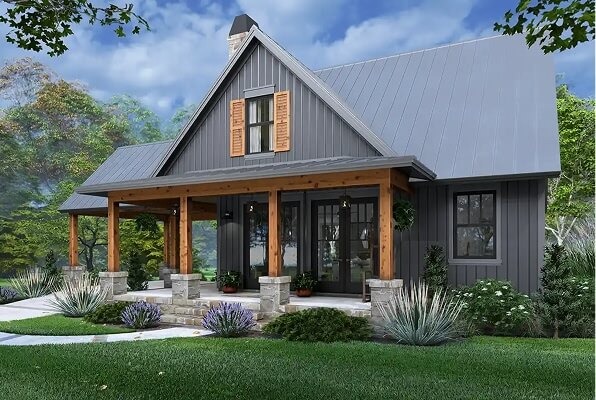
At Monster House Plans, you can take any two-story cottage plan and make it yours. Our licensed architects can help you adjust bedroom sizes, reconfigure the kitchen, add a garage, expand a porch, or swap out finishes to match your taste. If you want a primary suite on the main floor instead of upstairs, that's a common modification. If you'd like to finish the loft as a full bedroom with a closet and bathroom, that's possible too.
Use our Ask the Architect feature to discuss your ideas with a professional, and run your preferred plan through our Instant Cost-to-Build calculator to understand how your choices affect the budget.
Frequently Asked Questions About 2-Story Cottage House Plans
What is the typical square footage of a 2-story cottage house plan?
Two-story cottage plans generally range from about 1,200 to 2,500 square feet, though some designs fall outside that range depending on the layout. Smaller two-story cottages work well as vacation homes, while those on the larger end can comfortably accommodate families of four or five with room to spare.
How do two-story cottage plans handle staircase placement?
Staircase location varies by plan, but most designs position the stairs near the center of the home or along a side wall to minimize wasted hallway space. Some plans feature the staircase as a visual element in the great room, while others tuck it behind a wall for a cleaner look. If you have a preference, our architects can adjust the layout during the modification process.
Is it possible to have the primary bedroom on the first floor of a two-story cottage?
Yes, and this is a popular request. Many two-story cottage plans already include a main-floor primary suite, while others can be modified to add one. Having the primary bedroom downstairs is especially appealing for homeowners who want the extra space of a second floor for children or guests but prefer to keep their own bedroom at ground level.