
Author Archives: Admin

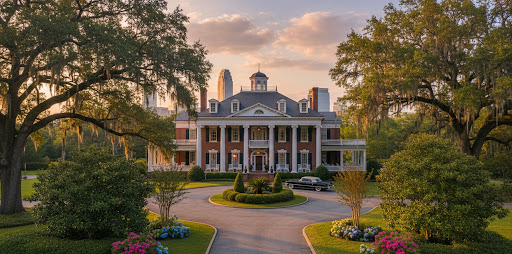
Grand Southern Colonial mansion with white columns, brick facade, circular driveway, and Spanish moss-draped oak trees at sunset.

From the modern craftsman-style homes in Plaza Midwood to the sprawling estates in Myers Park, Charlotte homes reflect what makes the Queen City so special: a unique blend of classic Southern charm and contemporary urban sophistication. 

If you’re planning a new build in the Charlotte area, the right “Carolina charm” house plan can give you that timeless curb appeal while still delivering the modern features most buyers want, like open kitchens, flexible office space, bonus rooms, and smart bedroom layouts that fit how your family lives. Southern-style house plans often emphasize open layouts that feel welcoming and comfortable, with spacious porches and centralized HVAC that make it easy to enjoy your home year-round. 

In this guide, we’ll highlight house plans that feel right at home in Charlotte neighborhoods, call out layout choices that work well on typical lots, and explore design features that make outdoor living more usable in hot, humid summers.

1. Timeless Colonial-Style House Plans

Charlotte’s modern colonial homes are inspired by early American colonial homes, with their distinctive symmetrical facades, rectangular shape, and a prominent central front door. Colonial-style house plans often break the mold for Southern home design with their lack of porch, but you’ll have plenty of space to tend to your garden or add landscaping features out front. Many Charlotte colonial-style homes incorporate a screened-in porch or three-season room on the side of the home, which makes it easier to enjoy the outdoors even when Charlotte’s hot, humid weather comes calling. 

The Southern colonial home design has a stately look that immediately draws attention. Inside, you’ll find a practical layout that embraces distinct living areas, hallways, and symmetrical design. Large bay windows give you ample natural light, while coffered ceilings inside and cornices on the exterior add ornamental sophistication that feels both historical and timeless.

What to Look for In a Plan

  • A symmetrical and rectangular exterior that’s instantly striking. 
  • A three-season sun room with a ceiling fan for year-round hosting and relaxing. 
  • A large family room and a grand entryway.

2. A Queen City Classic: The Craftsman-Style Home

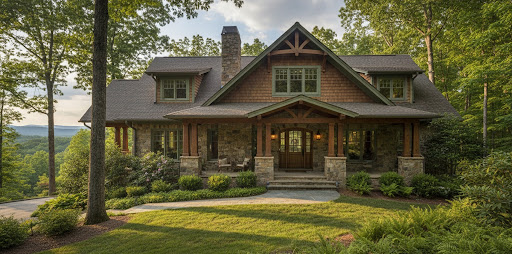
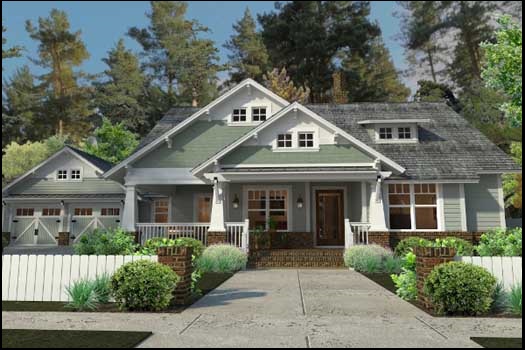
Take a leisurely drive through Plaza Midwood or Belmont, and you’ll see why Charlotte homeowners love Craftsman-style homes so much. The Bungalow Craftsman style, which offers compact home design that still feels spacious due to its open layout, is a Queen City favorite. Characterized by their low-pitched roofs, wide eaves, and a deep front porch, Craftsman homes are polished and classic, but still warm, welcoming, and built for everyday life in the Carolinas.

Modern craftsman home plans usually embrace an open floor plan with plenty of solid, natural materials like wood, brick, and stone. The result is an open, airy, but decidedly handcrafted feel that’s perfect for Charlotte’s particular brand of Southern charm.  While two-story options are available, more often than not, craftsman homes are a single story. A large front porch with plenty of space for plants and overhead fans provides the ideal outdoor retreat, even on humid Carolina days.

What to Look for In a Plan

  • Signature craftsman elements like tapered columns, wide porches, and exposed beams.
  • Double-hung windows that make it easy to enjoy the breeze on nice days.
  • Centralized HVAC placement for efficient cooling during hot Charlotte summers.
Craftsman-style mountain home with stone and cedar shake exterior, covered front porch, and timber accents surrounded by lush forest landscaping.

3. Spacious One-Story Ranch House Plans

Southern home design has long embraced the “rambler,” or ranch-style home, especially in less densely populated neighborhoods or suburbs. Ranch house plans are single-story designs that typically feature L-shaped or U-shaped layouts. Traditionally, ranch homes have segmented floor plans, but modern ranch layouts often utilize open-concept floor plans that make the home feel more opened up and breathable. 

Ranch homes are great for homeowners looking for a classic, simple style with minimal exterior upkeep. Most modern ranch house plans have attached garages, and some incorporate large windows and vaulted ceilings to add height. Ranch-style homes are ideal for families or aging-in-place planning due to their single-level design.

 What to Look for In a Plan

  • Sprawling single-level designs with L- or U-shaped layouts. 
  • Spacious attached garages with plenty of room for vehicles and storage.

4. Tudor-Style House Plans Full of Character

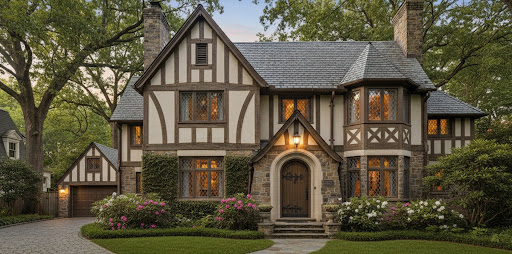
Charlotte boasts a significant number of Tudor-style homes, which can be seen dotting the tree-lined streets of Elizabeth and Dilworth. Influenced by late 16th-century English architecture but distinctly modern, Tudor house plans offer unique decorative features like stonework, half-timbered exteriors, arched windows, and steeply pitched roofs. The interior of these homes typically feature high ceilings, exposed beams, and luxury cabinets and built-ins. For Southern charm that has echoes of Medieval, Gothic, and Renaissance style, consider Tudor-style charming house plans for your next build in Charlotte.

What to Look for In a Plan

  • High ceilings and large fireplaces that make the space feel grand yet welcoming. 
  • Multi-paned windows and asymmetrical layouts make these home designs perfect for the homeowner who wants to stand out on their block.
Tudor-style home with cream stucco and dark timber framing, stone facade, arched wooden front door, leaded glass windows, and lush garden landscaping.

5. Minimal and Sustainable Contemporary Home Plans

Charlotte neighborhoods like NoDa and South End have seen a rise in contemporary home styles over the last decade. Common features of contemporary house plans in Charlotte include earth-tone finishes, open-concept layouts, lofted layouts, and minimal orientation. 

Many homeowners seek out contemporary home designs with sustainability in mind. These homes embrace minimalism and natural design elements like bamboo flooring. Large floor-to-ceiling windows make it easy to warm your home naturally during the fall into Charlotte’s mild winters. The flat or low-slope roofs that typically top these homes are ideal for homeowners planning to invest in solar panels, too.

What to Look for In a Plan

  • Floor-to-ceiling glass on the south side of the home.
  • An expansive roof that can accommodate solar panels. 
  • Clean, simple lines and open-concept layouts that make the space feel larger.

6. Old Southern-Style House Plans

Charlotte is home to many historic neighborhoods that boast century-old estates. If you want to build a new home that still feels like a part of Charlotte’s history, consider an old Southern-style house plan. These home designs are reminiscent of sprawling Southern plantations, but with contemporary amenities. Think tall white columns, red brick or stucco, and a grand driveway that makes your home feel larger than life.

What to Look for In a Plan

  • Sun rooms or three- (or four-) seasons rooms.
  • Centralized HVAC.
  • Plenty of windows to let in light.

Discover a House Plan With Carolina Charm

Monster House Plans features thousands of house plans with detailed floor layouts and elevation drawings so you can evaluate window placement, covered outdoor space, and garage orientation before you buy. Whether you’re looking for a specific architectural style or want to narrow down your choice by unique features like a garage or mudroom, we’ve got a home plan for you. 

Browse our collection today to find the perfect house plan for your next build in The Queen City.

Frequently Asked Questions

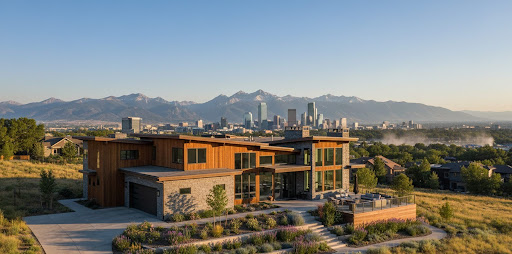
Mountain modern house plan with cedar and stone exterior, rooftop deck, and sweeping views of the Denver skyline and Rocky Mountains.

The Mile High City has much to offer in the way of natural beauty, with panoramic mountain views that take your breath away no matter how many times you see them. Denver’s blend of outdoor culture and metropolitan sophistication provides an ideal backdrop for a stunning modern mountain home plan that perfectly balances rustic style with modern design

If you’re planning a build along the Front Range, the right mountain modern house plan can help you capture natural light and views, create easy indoor-outdoor flow for sunny days, and still handle real-world needs like gear storage, mudroom drop zones, and a garage that works for daily life. 

In this guide, we’ll highlight mountain modern layouts that feel at home in the Denver market, while also calling out design choices that hold up to snow, wind, and big temperature swings so you can confidently shortlist a plan that’s both stylish and buildable.

1. Two-Story Layouts With Panoramic Windows

Just because you build your home in the Denver area, it doesn’t guarantee that you’ll have the mountain views you want. It’s not just location that matters, either. The Colorado mountain house plan you choose should prioritize features that enhance visibility as much as possible. A two-story home design gives you the added elevation you need, and panoramic windows give you the full picture of the stunning Rocky Mountains that made you want to build along the Front Range in the first place. 

An inverted living design — in which the primary living spaces, like the living room, den, and kitchen, are on the top level of the home —  is also well-suited for mountain views. 
What to look for in a plan: Strategic window placement to emphasize mountain views and a second-story covered deck with plenty of room for comfortable seating.

2. Plans With High Ceilings and Plenty of Wide Open Space

Homes built with high ceilings and open-concept layouts perfectly capture the spirit of Colorado living, creating spaces that feel as open and airy as the Rocky Mountain landscape itself. These designs maximize natural light and foster a seamless connection between the kitchen, dining, and living areas, making them ideal for modern entertaining and indoor-outdoor lifestyles. 

By eliminating visual barriers and expanding vertical space, high ceilings and open floor plans prevent the home from feeling restrictive, instead offering a spacious, breathable environment that invites relaxation and reflects the region’s expansive, outdoor-focused culture.
What to look for in a plan: Ceilings at 10 feet or higher in the living room or den and an open kitchen-to-living connection that feels spacious and organic.

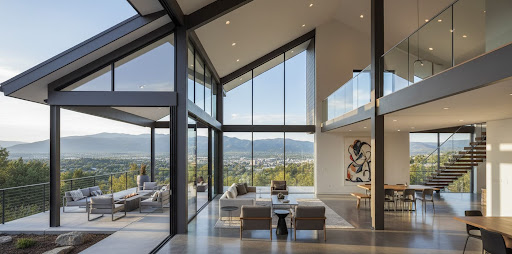
Denver house plan interior with soaring glass walls, open-concept living area, floating staircase, and panoramic mountain and city views.

3. Modern Takes on the Classic A-Frame

There’s a reason why Scandinavian-influenced A-frame homes have always inspired American mountain home design. When built along the Front Range, the A-frame style organically mimics the mountain views that serve as its backdrop. You won’t just own a home in the mountains; your home will feel like it belongs alongside the peaks of the Rocky Mountains. 

Clean lines, bright spaces, and modern amenities make the classic A-frame home feel fresh and contemporary. While the main drawback of an A-frame house plan is the possibility of sacrificing usable indoor living space, adding a spacious porch in front that feels visually cohesive with the central frame design can make the home feel bigger and more airy. 

A-frame designs are also practical for modern mountain living. Characterized by their steeply angled roofs that form the letter ‘A’, A-frame homes offer several advantages uniquely suited to living in Colorado. Winters here are snowy, and the sharp slope of an A-frame home makes for efficient shedding during heavy snowfall. A-frames also provide the perfect structure for large, central windows that bring in lots of natural light and give you an everyday eyeful of the stunning Colorado landscape. 
What to look for in a plan: A-frame design with central window placement and a deck that feels like an extension of the primary living space.

4. Plans That Bring the Outdoors Indoors

Outdoor culture is a central part of Colorado living. Hiking, cycling, canoeing – Denver area homeowners love to get outside and connect with nature while taking advantage of the beautiful views and fresh air that the Front Range offers. 

Modern mountain home plans that make it easy to embrace the outdoorsy lifestyle are a perfect fit for this area. Homeowners who canoe, fish, or cycle need space to store their recreational equipment. A garage or other storage space with plenty of room is essential. And after a day spent out in nature, a transitional space like a mudroom or laundry room makes it easy to kick off hiking boots and store away outerwear without cluttering up your main living space. 

The right house plan can also make your home truly feel like part of the beautiful natural Colorado landscape. A spacious porch or patio that flows seamlessly into your living space with glass sliding doors or a walkout basement house plan that integrates perfectly into Denver’s high elevation will make it feel like “the outdoors” extends right into your home. 
What to look for in a plan: A covered porch or patio and a big garage with plenty of space to store canoes or cycling equipment. A mudroom with plenty of space to transition from the rugged outdoors to the clean comfort of the primary living area.

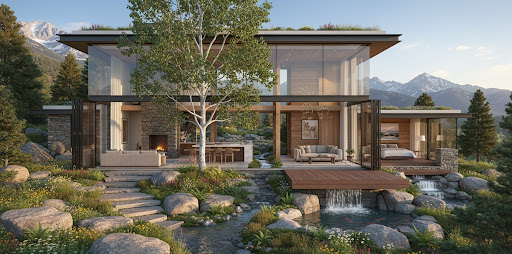
Modern mountain home plan with floor-to-ceiling glass walls, stone fireplace, wood decking over a waterfall pond, and snow-capped mountain views.

5. Energy-Efficient Plans With Room for Solar Panels

Energy efficiency is at the forefront of modern home design, and Colorado homeowners are increasingly considering sustainability and low utility costs as a major consideration when planning to build or buy. 

One thing to consider when choosing a house plan is the available surface area for solar panel installation. With over 300 sunny days a year, Colorado is naturally very solar supportive. The state offers multiple rooftop solar programs and was one of the first states in the U.S. to set a Renewable Energy Standard. 

Another design consideration that impacts energy efficiency is window placement. Windows allow you to heat your home naturally while filling your home with light and providing stunning views. Typically, south-facing windows are ideal for optimal sunlight. Opting for glass throughout the home, including windows and doors, is ideal for homeowners who want to brighten and warm their home with the power of the sun. 
What to look for in a plan: Floor-to-ceiling glass on the south side of the home and an expansive roof that will accommodate solar panels.

Find Your Plan for a Modern Mountain Retreat

Monster House Plans features thousands of house plans that you can filter by architectural style, square footage, stories, and specific features, like mudrooms, garages, and more. Every plan in our collection includes detailed floor layouts and elevation drawings so you can evaluate window placement, covered outdoor space, and garage orientation before you buy. 

Browse our collection today to find house plans that capture the airy, majestic feeling worthy of the Rocky Mountains.

Frequently Asked Questions

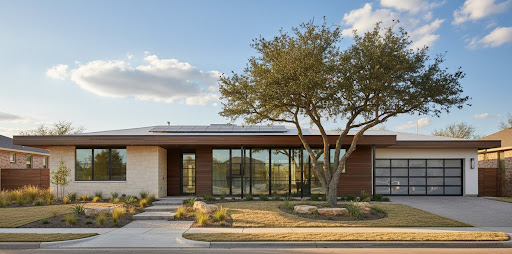
Modern single-story home with flat roof, wood and limestone exterior, floor-to-ceiling windows, glass-panel garage door, solar panels, and drought-tolerant front landscaping with ornamental grasses and boulders beneath a large shade tree.

Ask 10 people in the Metroplex what a “typical” North Texas home looks like, and you’ll get 10 different answers. That’s because Dallas-Fort Worth has never been a one-style kind of market. Limestone ranch homes sit a few miles from sleek contemporary builds, and modern farmhouses share zip codes with brick colonials. For anyone planning a new build, that variety is exciting and overwhelming.

The good news? Once you know which popular house plan styles show up most often across the Metroplex (and why builders keep coming back to them), you can cut through the noise fast. Below, we’ve rounded up seven of the most popular house plans in Dallas-Fort Worth, along with the climate-smart features and layout details that make each one a strong fit for North Texas living.

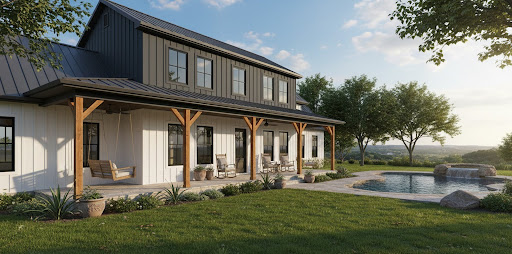
Two-story modern farmhouse with white board-and-batten siding, dark metal roof, and wraparound covered back porch featuring wood timber posts, a porch swing, and rocking chairs, adjacent to a freeform pool with a rock waterfall feature and lush green lawn overlooking a wooded hillside.

1. Modern Farmhouse

Modern farmhouse plans have dominated the DFW building scene for years, and their popularity isn’t slowing down. You’ll see them everywhere from Prosper to Mansfield, and for good reason: they pair a clean, contemporary feel with warm, livable details that families gravitate toward.

What makes a modern farmhouse plan stand out in North Texas? Open-concept living areas, large kitchen islands, board-and-batten or mixed-material exteriors, and covered porches that let you enjoy the outdoors without baking in the summer sun. Most of these Dallas-Fort Worth floor plans also feature rear- or side-entry garages, which keeps the front elevation clean for neighborhoods with strict HOA guidelines.
Why it works in DFW: The tall ceilings and open floor plans keep living spaces feeling airy during hot months, while covered front and back porches give you shaded outdoor space from spring through fall. If your lot backs up to a greenbelt or open space, a modern farmhouse plan with a large rear porch takes full advantage of the view.

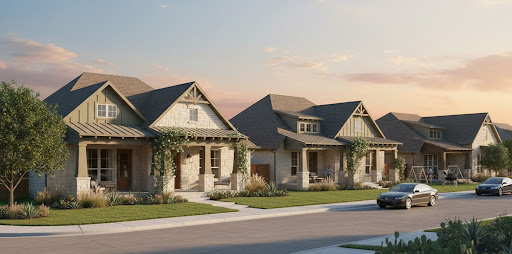
A row of craftsman-style single-story homes at sunset featuring stone and board-and-batten exteriors, decorative gable trusswork, covered front porches with climbing vines, and landscaped yards with ornamental grasses, set along a quiet residential street.

2. Craftsman

Craftsman-style house plans bring a sense of character and handcrafted detail that stands out in DFW’s newer subdivisions. You’ll recognize them by their tapered columns, low-pitched gable roofs, wide front porches, and exposed rafter tails. Inside, Craftsman plans tend to feature built-in shelving, defined living spaces that still feel connected, and thoughtful use of natural materials like stone and wood.

Craftsman plans are a strong pick for families who want curb appeal without going too ornate. Many of the best house plan styles for Texas borrow Craftsman elements because they translate well to the region’s building materials and suburban lot sizes.
Why it works in DFW: Craftsman homes sit well on the moderate-to-large lots common in cities like Keller, Southlake, and Flower Mound. The wide front porches provide shade over entryways and windows, which helps reduce cooling costs during July and August. Stone accents on the lower exterior hold up beautifully against North Texas weather, too.

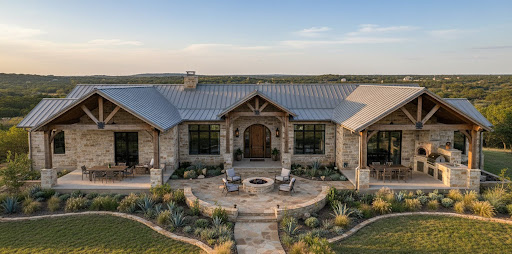
Aerial view of a sprawling Texas Hill Country ranch home with limestone exterior, metal roof, and exposed timber trusses, featuring a stone patio, and native xeriscape landscaping overlooking a wooded valley.

3. Texas Hill Country / Ranch

No list of popular house plan styles in Dallas-Fort Worth would be complete without the Texas Hill Country style. While this look originated further south and west, it has become a favorite across the Metroplex for buyers who want something distinctly Texan.

Texas Hill Country plans lean on native limestone exteriors, metal roofing accents, heavy timber details, and single-story footprints with wide, sprawling layouts. Large windows bring in natural light, while deep porches and overhangs shade them from direct sun. You’ll often see outdoor living rooms, summer kitchens, and courtyard-style entries in these plans.
Why it works in DFW: The single-story layout fits perfectly on the wider suburban lots found in communities like Celina, Aledo, and Midlothian. Metal roofing reflects heat and handles hailstorms better than standard asphalt shingles. And the emphasis on indoor-outdoor flow means you can use your patio space for eight or nine months out of the year.

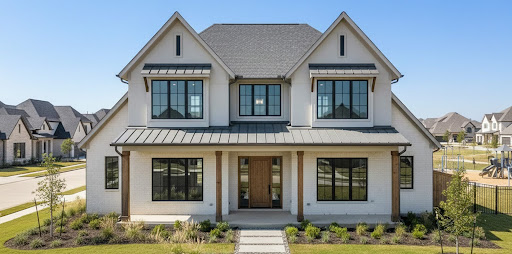
Two-story modern farmhouse with white painted brick exterior, black-framed windows, mixed metal and shingle roof, covered front porch with wood posts and a natural wood front door, set in a new suburban neighborhood with manicured landscaping and a community playground visible in the background.

4. Transitional (Contemporary Meets Traditional)

Transitional house plans are gaining serious traction in DFW, especially in master-planned communities. This style blends traditional forms (gable roofs, symmetrical proportions) with contemporary finishes (flat-panel cabinetry, large windows, minimal exterior trim). The result feels current without straying so far into modern territory that it clashes with neighboring homes.

Inside, transitional plans prioritize open living and dining areas that connect to the kitchen, home offices or flex rooms, and primary suites on the main level. Exterior materials typically mix brick, stone, and stucco in muted tones.
Why it works in DFW: Many DFW homeowner associations require homes that “fit the neighborhood” without specifying a single architectural style. Transitional plans thread that needle. They look at home next to Craftsman or traditional builds while still giving you a fresh, updated interior. Larger windows improve natural lighting and make rooms feel bigger, a practical advantage in the tighter lot-to-lot spacing common in newer subdivisions.

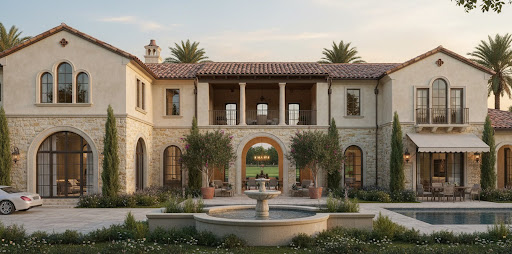
Grand Mediterranean-style estate with stucco and limestone exterior, clay tile roof, and arched windows and doorways, featuring a central courtyard with a stone fountain, columned upper loggia, manicured cypress trees, flowering plants, and a pool, framed by tall palm trees at dusk.

5. Mediterranean / Tuscan

Mediterranean- and Tuscan-inspired plans still hold a strong presence in upscale DFW communities. These plans feature stucco or stone exteriors, clay tile roofs, arched windows and doorways, and interior courtyards or loggia-style outdoor spaces.

Inside, expect large gathering rooms with high ceilings, formal dining areas, expansive primary suites, and well-defined entries with dramatic foyer spaces. Many Mediterranean DFW house plans also include casita-style guest quarters or detached garage apartments.
Why it works in DFW: The thick stucco walls and courtyard layouts historically evolved in hot climates, so they perform well in North Texas summers. Clay tile roofs are durable against hail (a real concern here), and shaded courtyards create a breeze-catching microclimate that makes outdoor spaces usable even in peak heat.

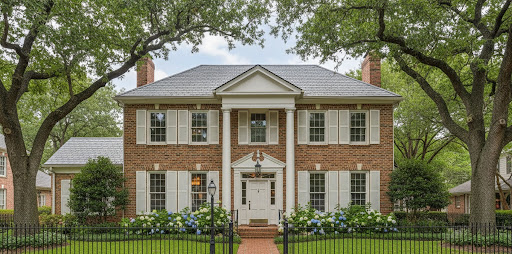
Classic two-story Georgian Colonial brick home with white pilasters, pediment entry, louvered shutters, and twin chimneys, framed by mature live oak trees, an iron fence, and a colorful border of blue and white hydrangeas along a brick walkway.

6. Traditional / Colonial-Inspired

Colonial house plans remain a staple across the DFW market, particularly in established neighborhoods and communities that prioritize a classic, timeless look. You’ll find these homes throughout Plano, Richardson, Grapevine, and Arlington. They typically feature brick exteriors, symmetrical facades, shuttered windows, and two-story layouts with defined rooms.

Don’t confuse “traditional” with “outdated,” though. Today’s traditional Dallas-Fort Worth house plan styles incorporate open kitchens, larger primary suites, mudrooms, and flexible bonus spaces upstairs. You get the polished exterior of a classic home, with a floor plan that reflects how families live today.
Why it works in DFW: Brick performs exceptionally well in the North Texas climate. It withstands temperature swings, requires minimal maintenance, and stands up to the severe thunderstorms that roll through every spring. Two-story plans also make efficient use of narrower lots, which are becoming more common as DFW land values rise.

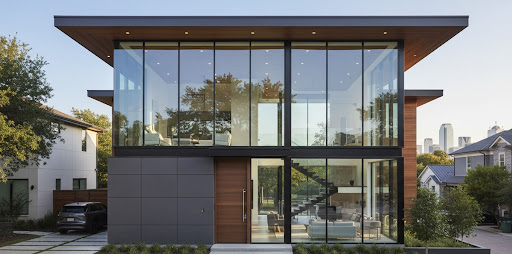
Two-story contemporary home with full-height black-framed curtain wall glass, cantilevered flat roof with wood soffit, gray metal panel base, and a pivoting wood front door, revealing an open-plan interior with a floating staircase, set in an urban neighborhood with a city skyline visible in the distance.

7. Modern / Contemporary

Modern and contemporary plans are the fastest-growing segment in DFW’s new-construction market. Flat or low-slope rooflines, floor-to-ceiling glass, minimalist exteriors, and open interior volumes define this style. You’ll see these homes popping up in urban-adjacent neighborhoods.

Inside, modern plans focus on clean lines, integrated storage, floating staircases, and indoor-outdoor connections through sliding glass wall systems. Minimalism drives the layout, so every square foot has a clear purpose.
Why it works in DFW: Energy-efficient building envelopes, strategic window placement for daylighting, and flat roofs designed for proper drainage all suit the Texas climate. Many modern plans also integrate smart-home wiring from the ground up, which appeals to the tech-forward buyer demographic growing across North Texas.

How To Choose the Right Style for Your DFW Build

Picking from the most popular house plans in Dallas-Fort Worth comes down to a few practical questions:

What does your lot look like? Wide suburban lots in outer-ring cities like Celina or Weatherford can accommodate sprawling single-story plans. Narrower infill lots closer to downtown may call for a two-story traditional or modern plan that builds up instead of out.

What does your HOA allow? If you’re building in a master-planned community, check the architectural guidelines before you fall in love with a plan. Some communities restrict roofing materials, exterior colors, or even the percentage of your facade that must be brick or stone.

How do you use outdoor space? Covered patios, screened porches, and outdoor kitchens are practically standard in DFW builds. If outdoor entertaining is a priority, look for plans with a strong rear porch footprint or a courtyard layout.

How important is energy efficiency? Certain styles handle Texas heat better than others. Deep overhangs, shaded porches, courtyard layouts, and reflective roofing materials all help keep cooling costs down during those 100-degree stretches in July and August.

Once you answer those questions, you’ll be ready to pick your favorite DFW house plan.

Modern Farmhouse Meets Metroplex

Take a peek at one of our modern farmhouse plans and see why they’re among the most popular house plans in Dallas-Fort Worth.

Your Future DFW Home Starts With the Right Plan

We carry thousands of house plans in every style on this list, and you can filter by square footage, bedrooms, stories, garage configuration, and architectural style to find exactly what fits your build. Every plan comes with detailed floor layouts and elevation drawings, so you’ll know precisely what you’re getting. Browse our full collection today and take the first real step toward building in Dallas-Fort Worth.

Frequently Asked Questions

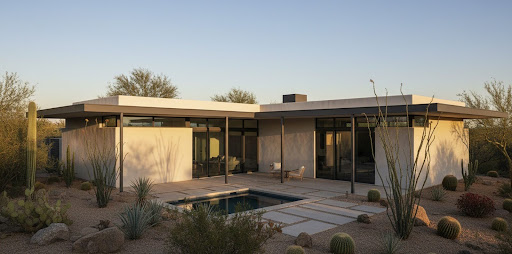
Exterior rear view of a modern desert home with a flat roof, stucco walls, and floor-to-ceiling glass sliding doors opening to a concrete patio with a rectangular pool, surrounded by native Sonoran desert landscaping including saguaro cacti, barrel cacti, agave, and boulders at dusk

Phoenix doesn’t ease you into summer. By late May, daily highs regularly clear 100°F, and by July, your home’s floor plan is doing just as much work as your HVAC system. The way a house is laid out, where the windows sit, how the roof handles direct sun, and how much usable shade exists outside all affect how comfortable you are indoors and how much you pay to stay that way.

That’s why choosing house plans for a desert climate requires a different kind of checklist than building in, say, the Pacific Northwest or the Midwest. In Phoenix, the plan itself is part of your cooling strategy. Below, we’ve broken down the best house plan designs for Phoenix based on the specific layout features and architectural details that help a home perform in extreme heat. If you’re building in the Valley, these are the styles and plan elements worth putting at the top of your list.

1. Single-Story Plans With a Compact Footprint

Two-story homes have their place, but single-story plans offer a real advantage in Phoenix. Heat rises, and a second-floor sitting directly under the roof absorbs the worst of it. In a single-story layout, you can insulate and ventilate the attic space above the entire living area, creating a buffer between your ceilings and the blazing roof.

A compact footprint also means less exterior wall space exposed to the sun. The more spread out a home is, the more surface area absorbs radiant heat throughout the day. Look for single-story hot-climate house plans that cluster bedrooms and living spaces efficiently rather than stretching them into long wings. That tighter envelope is easier and cheaper to cool.
What to look for in a plan: Centralized HVAC placement (shorter duct runs lose less cooled air), high ceilings for heat stratification, and attic space with room for heavy insulation.

2. Courtyard-Style Layouts

Courtyard house plans are practically engineered for desert living. The enclosed or semi-enclosed outdoor space sits protected from wind-driven dust and direct afternoon sun, creating a shaded microclimate in the center of the home. Historically, builders across the American Southwest, the Mediterranean, and the Middle East used this layout for exactly this reason.

In a Phoenix courtyard plan, the home’s rooms wrap around a central patio, so the interior walls facing the courtyard get shade from the structure itself for most of the day. This reduces the heat load on those walls significantly compared to fully exposed exterior surfaces. Add a water feature or some potted desert plants, and you’ve built an outdoor room that’s genuinely usable even in July.

Many of our southwestern-style house plans incorporate courtyard elements, and they’re some of the most popular picks among Arizona buyers.

What to look for in a plan: A true courtyard (fully or partially enclosed by the home’s wings) and sliding or folding glass doors that open living spaces to the courtyard.

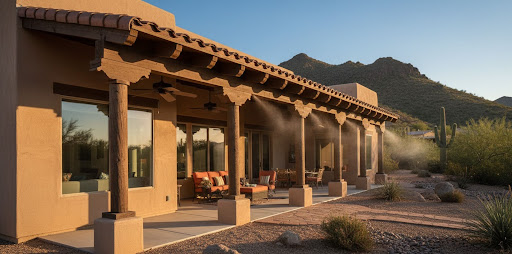
Exterior rear view of a Territorial-style desert home with warm tan stucco walls, a clay tile roof, and a covered patio supported by decorative wood columns, furnished with rust-colored outdoor seating and ceiling fans with an active misting system, surrounded by native desert landscaping and a dramatic rocky mountain backdrop

3. Plans With Deep Roof Overhangs and Covered Porches

In Phoenix, shade isn’t a luxury. It’s infrastructure. A house plan with deep roof overhangs (two feet or more) keeps direct sunlight off your exterior walls and windows during the hottest hours of the day. That single detail can meaningfully reduce indoor temperatures and lighten the load on your cooling system.

Covered rear porches and patios extend that same principle to your outdoor living space. A standard uncovered patio in Phoenix is unusable for roughly four months of the year during daylight hours. A covered patio with ceiling fans and misting capability becomes a functional room that you can use year-round.

Southwest house plans and Spanish-style house plans tend to feature generous overhangs as a core design element, not an afterthought. If you’re comparing plans side by side, pay close attention to how much covered outdoor square footage each plan includes.
What to look for in a plan: Overhangs of at least 24 inches on south- and west-facing walls, covered patios with enough depth to shade the adjacent windows, and outdoor ceiling fan pre-wiring.

4. Energy-Efficient Plans With Strategic Window Placement

Windows are one of the biggest heat-gain culprits in any home, and in Phoenix, a large west-facing window can turn a room into an oven by 3 p.m. Energy-efficient house plans for the desert prioritize where glass goes, not just how much of it there is.

The best house plan designs for Phoenix minimize glazing on the west elevation and concentrate larger windows on the north side, where they bring in soft, indirect light without the brutal heat gain. East-facing windows get morning sun, which is manageable. South-facing glass can work well with proper overhangs that block the high summer sun but allow lower-angle winter light to warm the home during cooler months.

This isn’t about eliminating natural light. It’s about controlling it. A plan with thoughtful window placement will feel brighter and more open than one that scatters oversized windows across every elevation without considering orientation.
What to look for in a plan: Smaller or fewer windows on the west elevation, clerestory windows for daylighting without direct heat gain, and notation of low-E or dual-pane glass specifications.

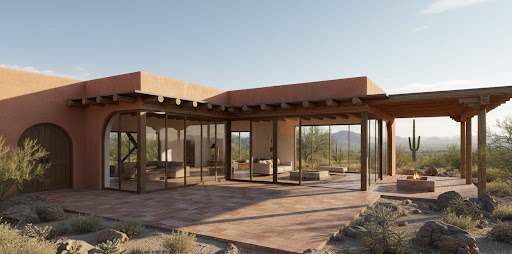
Exterior rear view of a Southwestern adobe-style home with terracotta-colored stucco walls, rustic wood beam pergolas, and large glass sliding doors opening to a tiled patio with an outdoor fire pit, set against a sweeping desert landscape with saguaro cacti and distant mountains.

5. Plans With Attached but Buffered Garages

House plans for hot climates that position the garage on the west or southwest side of the home use the garage as a thermal buffer, absorbing afternoon sun before it reaches your living spaces. Plans that include an insulated shared wall or a utility/laundry room between the garage and the main living area add another layer of protection.

If you’re looking at a plan with a front-entry garage, check which rooms sit directly behind it. If it’s the primary bedroom or family room, you may want to request a modification or choose a different layout.
What to look for in a plan: A garage on the west side of the home, a buffer room (laundry, mudroom, pantry) between the garage and primary living areas, and insulated garage-to-house walls noted in the specifications.

6. Open Floor Plans With High Ceilings

Open floor plans serve a functional purpose in Phoenix. Large, connected living areas allow cooled air to circulate more freely throughout the home, reducing the hot spots that develop in homes with lots of closed-off rooms and narrow hallways.

Pair that open layout with high ceilings (10 feet or above), and you get meaningful heat stratification: the hottest air rises to the ceiling while the cooler air you’re breathing stays lower. Ceiling fans in these spaces push that stratified air around, which makes the room feel cooler without dropping the thermostat.

Many of the house plan designs for hot climates in our collection feature great rooms with 10- to 12-foot ceilings that connect seamlessly to the kitchen and dining areas. It’s a layout that feels spacious and performs well thermally.
What to look for in a plan: Great room ceilings at 10 feet or higher, an open kitchen-to-living connection, and ceiling fan pre-wire locations noted on the electrical plan.

7. Desert Contemporary and Southwestern Designs

If you want a home that looks like it belongs in the Sonoran Desert and performs like it was built for it, desert contemporary and Southwestern-style plans deserve a close look. These styles evolved specifically for arid climates, so their design DNA already accounts for extreme heat, intense sun, and minimal rainfall.

Southwestern plans lean on flat or low-slope rooflines, clean stucco exteriors, earth-toned color palettes, and strong indoor-outdoor connections through walls of glass that face shaded courtyards or covered patios. They also incorporate details such as exposed wood beams (vigas), arched doorways, tiled roofs, and textured stucco in warm terracotta tones.

Both styles favor thermal mass materials like concrete block, stucco, and stone, which absorb heat slowly during the day and release it after sundown when desert temperatures drop. That natural temperature buffering makes a noticeable difference in cooling costs.
What to look for in a plan: Stucco or masonry exterior walls, flat or low-pitch rooflines with parapet walls for shade, and outdoor living rooms integrated into the main floor plan.

Built for the Sun: Find Your Phoenix-Ready Plan

We carry thousands of house plans that you can filter by architectural style, square footage, stories, and specific features. Every plan in our collection includes detailed floor layouts and elevation drawings so you can evaluate window placement, covered outdoor space, and garage orientation before you buy. Start browsing today and find a plan that’s built to handle everything a Phoenix summer can throw at it.

Frequently Asked Questions

Building a house is a dream for many, but turning that dream into reality requires meticulous planning and budgeting. This guide will walk you through the essential steps to ensure your home-building project stays on budget and stress-free.

Initial Planning

Before diving into the financials, it’s crucial to define what you want from your new home. Consider the number of bedrooms and bathrooms, the total square footage, and any must-have features. Opting for a ready-made house plan can save time and money, offering a clear starting point for your budget​.

Setting a Budget

  1. Get Pre-Approved: Secure a construction loan to understand your budget limits. This step will help set realistic financial boundaries for your project​.
  2. Include a Contingency Fee: Unexpected costs are common in home-building projects. To cover these, add a 15-20% contingency fee to your budget​.

Cost Breakdown

Lot Costs: The price of the land, its condition, and preparation needs can significantly impact your budget—factor in utilities and any required lot improvements​.

Design Fees: Design fees can vary depending on whether you choose an architect or a design-build firm. For ready-made plans, consider additional costs for any necessary modifications​.

Construction Costs: These include everything from the foundation and framing to roofing and mechanical systems. Site work, such as clearing the lot and grading, is also a significant part of construction costs​.

Hard vs. Soft Costs

When planning how to budget for building a house, it’s helpful to categorize expenses into hard and soft costs.

  • Hard Costs: These are direct construction expenses, including labor and materials​.
  • Soft Costs: These include land purchase, engineering, permits, taxes, and other non-material expenses. They can often make up a substantial portion of the overall budget​.

Detailed Budget Items

Exterior Finishes: Roofing, windows, doors, and exterior wall finishes are major contributors to your budget.

Interior Finishes include insulation, drywall, trim, lighting, appliances, and cabinetry. They are often the most expensive part of the building process​.

Landscaping: Don’t forget to budget for landscaping. Garden walls, extensive planting, and other exterior improvements can add significant costs​.

Managing the Budget

Track Deviations: Keep meticulous records of any changes to the initial plan and their associated costs to avoid unpleasant surprises​.

Regular Updates: Continually update your budget as the project progresses. Regularly revisiting your financial plan helps ensure you stay on track.

Cost-Saving Tips

Energy Efficiency: Investing in energy-efficient insulation, windows, and appliances can reduce long-term costs. Proper sealing and insulation, energy-efficient windows, and smart home systems are excellent investments​.

Ready-to-Build Plans: Save on design costs by selecting ready-made plans. These plans often come with pre-determined material lists, which can help provide more accurate cost estimates​.

Conclusion

Thorough budgeting is essential to successfully build your dream home without financial stress. By following these steps and regularly consulting with professionals, you can create a realistic budget that accommodates your needs and helps ensure a smooth building process.

Planning Your Barndominium


Building your dream barndominium starts with thorough planning. From understanding zoning laws to finalizing your budget, here’s what you need to consider:

Understanding Zoning Laws and Regulations

Before you break ground on your barndominium project, it’s crucial to familiarize yourself with local zoning laws and regulations. Each area has its own set of rules governing property use, building codes, and permit requirements. These regulations can dictate the type of structure you can build, its size, and even its aesthetic features.

Start by contacting your local zoning department or building authority to inquire about the specific requirements for constructing a barndominium in your area. They can provide valuable information on zoning restrictions, setback requirements, and any permits you’ll need to obtain before beginning construction.

By understanding and adhering to these regulations from the outset, you’ll avoid potential setbacks and ensure that your barndominium is built in compliance with local laws.


Choosing the Right Location

The location of your barndominium can significantly impact its overall functionality, accessibility, and aesthetic appeal. Consider the following factors when selecting a site for your new home:

Land Features: Evaluate the terrain and natural features of potential building sites, such as soil quality, drainage patterns, and topography. Choose a location that offers good drainage and minimizes the need for extensive site preparation.

Accessibility: Assess the accessibility of the site in terms of proximity to roads, utilities, and essential services like schools, shopping centers, and healthcare facilities. A convenient location will enhance the practicality and long-term value of your barndominium.

Utilities: Determine the availability of essential utilities, including electricity, water, and sewage systems. If utilities are not readily available, factor in the cost and feasibility of installing them on your chosen site.

Aesthetics: Consider the surrounding landscape and views when selecting a location for your barndominium. Whether you prefer sweeping vistas of the countryside or the coziness of a wooded setting, choose a site that complements your lifestyle and aesthetic preferences.

By carefully considering these factors, you can choose a location that provides the ideal foundation for your barndominium project.

Designing Your Layout

Once you’ve selected a suitable location for your barndominium, it’s time to design the layout of your new home. Barndominiums offer tremendous flexibility in terms of design, allowing you to create a space that meets your unique needs and preferences.

Consider the following design elements when planning your barndominium layout:

Open Floor Plan: Embrace the spaciousness of a barndominium by opting for an open floor plan that maximizes natural light and creates a sense of openness. This layout is ideal for entertaining guests and promoting family togetherness.

Workspaces and Storage: Incorporate designated areas for workspaces, storage, and hobbies to ensure that your barndominium meets your practical needs. Whether you need a home office, a workshop, or a dedicated space for outdoor gear, thoughtful planning can optimize your home’s functionality.

Personalization: Make your barndominium feel like home by incorporating personalized touches that reflect your style and personality. From choosing interior finishes and fixtures to selecting architectural details and decor, every decision should align with your vision for your dream home.

You can also choose a pre-made barndominium plan, which will save you time and money! Check out some of our most popular options here: Barndominium Plans

Budgeting

Building a barndominium is a significant investment, so it’s essential to establish a realistic budget before you begin the construction process. Consider the following expenses when budgeting for your barndominium project:

Construction Costs: Factor in the cost of materials, labor, and equipment needed to build your barndominium. Obtain quotes from reputable contractors or builders to estimate these expenses accurately.

Land Acquisition: If you haven’t already purchased a building site, include the cost of land acquisition in your budget. Research property prices in your desired location and budget accordingly.

Permit Fees: Don’t overlook the cost of obtaining building permits and complying with regulatory requirements. Factor these fees into your budget to avoid unexpected expenses later on.

Contingency Fund: Set aside a contingency fund to cover unforeseen expenses or changes during the construction process. A general rule of thumb is to allocate 10-20% of your total project cost for contingencies.

By creating a detailed budget and accounting for all potential expenses, you can ensure that your barndominium project stays on track financially and avoid any budgetary surprises along the way.

Design Considerations and Customization

Designing your barndominium allows you to tailor every aspect of your home to suit your lifestyle and preferences. From architectural style to interior finishes, here are some key design considerations to keep in mind:

Architectural Style and Materials

One of the most appealing aspects of building a barndominium is the opportunity to choose a style that reflects your personal taste and complements the surrounding landscape. Whether you prefer a traditional barn-inspired design or a modern interpretation, there are endless possibilities to explore.

Consider the following architectural styles and materials when designing your barndominium:

Traditional Barn Style: Embrace the rustic charm of a traditional barn with features such as a gable roof, board-and-batten siding, and barn doors. This timeless style pays homage to the agricultural roots of barndominiums while providing a cozy and inviting living space.

Modern Minimalist Design: Opt for a sleek and contemporary look with clean lines, minimalist detailing, and industrial materials such as steel and concrete. Minimalist design emphasizes simplicity and functionality, creating a sophisticated backdrop for modern living.

Combination of Styles: Mix and match architectural elements from different styles to create a unique and eclectic aesthetic. For example, you could combine the warmth of wood siding with the crisp lines of metal roofing for a striking visual contrast.

When selecting materials for your barndominium, prioritize durability, energy efficiency, and low maintenance. Popular options include metal roofing and siding, insulated concrete panels, and high-performance windows and doors.

The Construction Process

Once you have finalized the design and secured all necessary permits, it’s time to embark on the construction phase of your barndominium project. Here’s what you can expect during the construction process:

Choosing a Builder

Selecting the right builder or contractor is crucial to the success of your barndominium project. Look for professionals with experience in constructing barndominiums and a proven track record of quality craftsmanship. Consider the following factors when choosing a builder:

Experience and Expertise: Seek out builders who specialize in barndominium construction and have a thorough understanding of the unique challenges and requirements of these structures.

Portfolio and References: Review the builder’s portfolio of past projects and ask for references from previous clients. A reputable builder will be proud to showcase their work and provide testimonials from satisfied customers.

Communication and Transparency: Choose a builder who communicates openly and transparently throughout the construction process. Clear communication is essential for ensuring that your vision is realized and that any issues or concerns are promptly addressed.

Licensing and Insurance: Verify that the builder is properly licensed, bonded, and insured to perform construction work in your area. This protects you from liability and ensures that the builder meets the necessary legal requirements.

Once you’ve selected a builder, work closely with them to develop a detailed construction plan and timeline. Regular communication and collaboration will help ensure that your barndominium project stays on track and meets your expectations.

Timeline and Milestones

The construction timeline for a barndominium can vary depending on factors such as the size and complexity of the project, weather conditions, and the availability of materials and labor. Here’s a general overview of the typical milestones you can expect during the construction process:

Site Preparation: Clearing and grading the building site to prepare for construction, including excavation, foundation work, and utility installation.

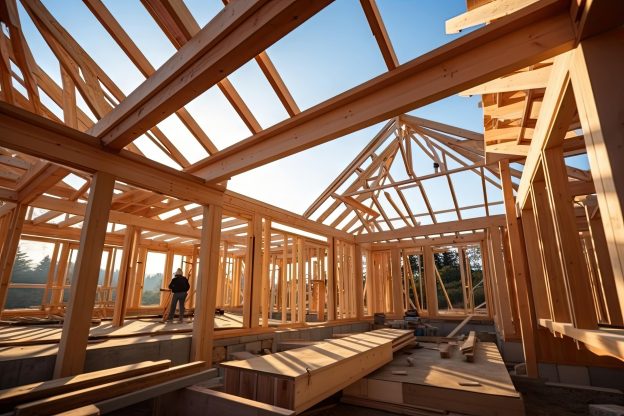
Frame Erection: Erecting the structural frame of the barndominium, including the walls, roof trusses, and support columns. This stage may involve crane operations and specialized equipment.

Enclosure: Installing exterior cladding, roofing, doors, and windows to enclose the building and protect it from the elements.

Interior Finishes: Completing interior finishes such as insulation, drywall, flooring, cabinetry, and trim work. This stage also includes electrical, plumbing, and HVAC installations.

Final Touches: Adding finishing touches such as paint, hardware, fixtures, and landscaping to enhance the aesthetic appeal of the barndominium.

Throughout the construction process, your builder will coordinate subcontractors, manage logistics, and ensure that work is completed according to schedule and quality standards. Be prepared for occasional delays or unforeseen challenges, but with proper planning and communication, your barndominium will soon take shape.

Handling Inspections and Approvals

As construction progresses, it’s essential to schedule and pass required inspections to ensure that your barndominium meets building code requirements and safety standards. Your builder will coordinate with local building authorities to schedule inspections at various stages of the construction process, such as foundation, framing, electrical, plumbing, and final occupancy.

Be prepared to address any issues or deficiencies identified during inspections promptly. Making corrections in a timely manner will help keep your project on schedule and prevent costly delays.

Once all inspections have been successfully completed, your builder will obtain final approvals from the building department, allowing you to move forward with occupancy and enjoy your newly constructed barndominium.

architectural styles

The Basics of Building a Home


According to data from the National Association of Home Builders, the average cost to build a single-family home in the United States was just under $300,000. Please note that this amount does not include expenses such as purchasing land, finishing a lot, financing it, and so forth. When you take these additional costs into consideration, the average price of a new construction is roughly $485,000.

Hard vs. Soft Costs

When it comes to building a home, it is important to be cognizant of both “hard costs” and “soft costs.”  Navigating both costs effectively is critical for how to budget for building a house. For context, hard costs are the expenses necessary to actually build the structure of your home. Examples of hard costs include materials, contractors, site preparation, foundation, and so forth. In contrast, soft costs are the “other” expenses that are not directly related to the actual brick and mortar of your home. Nevertheless, they are equally important and should not be neglected. Examples of soft costs include building permits, house plans, taxes, HOA fees, and so forth. 

Costs you need to consider


There are specific expenses you need to consider when planning to build your dream home. Below are examples of the types of expenses you should factor in when calculating the budget for building your home:


  • Cost of purchasing land
  • Labor (i.e., contractors)
  • Appliances
  • Landscaping
  • Exterior and interior finishes
  • Foundation
  • Mandatory fees paid to a Homeowners Association (HOA)

Setting Your Budget


Determine how much you can/want to spend

In terms of how to budget for building a house, it is important to avoid being “house-rich and cash-poor.” This is why you need to take the time to determine how much you can reasonably spend on building a home, in addition to how much you actually want to spend. Avoid the temptation of “going all in” and spending every penny you have on the cost of building your home. You need to retain a level of financial flexibility in case an unexpected expense arises. You should also ensure the mortgage cost associated with the home aligns with your budget and current income level.

Factors to consider (income, savings, loan eligibility) 

To properly budget for building a home, there are specific factors that need to be considered in your analysis and calculus. These factors include your current income, current savings, and the types of home loans you may qualify for based on your credit score, credit history, and so forth. These factors will play a major role in determining just how much you can actually afford to put into building a home. 

Build a Buffer


When building a new home, it is better to be safe than sorry. That is why it is strongly recommended to build a buffer into your new home budget. Why? Because it is quite common for people to exceed the initial estimate for the cost to build their dream home. It is so common that mortgage lenders typically recommend baking in a 15-to-20 percent buffer in your total budget to help protect you from the “known unknowns.” You do not want to be one of the many homeowners who neglected to properly budget for landscaping, garden walls, foundation issues, HOA issues, and so forth.

Estimating the Cost to Build

In the United States, the median cost to build a single-family home was between $226,100 and $452,200.


On average, the cost to build a custom house ranges between $100 and $200 per square foot. However, the cost per square foot will fluctuate based on your location and the level of customization in your home design. For example, in certain areas, the cost can soar to between $400 and $500 per square foot. 

Saving Money Without Compromising Quality

In terms of how to budget for building a house, there are simple strategies to help save money without compromising the quality of your custom home. For example, consider going with a simple home layout rather than an elaborate, uncommon layout. If you go with a layout closer to a square shape or rectangular shape, there is a good chance you will save money since the expense of designing and building this type of structure is more efficient than other layouts. 


Another strategy for saving money on your custom home is opting to build an “eco-friendly” home with energy-efficient appliances, energy-efficient windows, and so forth. In fact, many states offer government rebates and tax incentives for homes with specific energy efficiencies.


Another cost-saving strategy is doing specific projects independently without retaining a contractor.  Doing certain projects yourself will allow you to save money in your total budget. Nevertheless, it is recommended to let a professional handle complex plumbing or electrical jobs.

Start Your Home Building Journey with Monster House Plans Today!


If you’re looking to build your dream home, Monster House Plans is here to help. Our services are unlike any other option because we offer unique, brand-specific ideas that you can’t find elsewhere. For example, with our cost-to-build calculator, you will have the ability to select from an array of materials that generates a bespoke report offering a comprehensive cost estimate broken down by estimated labor, materials, and other factors. Learn more about Monster House Plans and what we can do for you.

Before you can build your dream home, you need to figure out how to get house plans. The architectural design of your house will determine the overall flow and feel, which is why house plans are so important. Luckily, you can get house floor plans online and choose from thousands of pre-designed options. 

Floor Plans with Monster House Plans

Since 2007, Monster House Plans has been a leading resource for custom home builders. With over 30,000 options to choose from, understanding how to get house plans has never been easier. 

Large Library of Plans

Do you love the look of a classic Colonial home? How about a rustic log cabin? Maybe you just know what kind of build you like best when you see it. Either way, Monster House Plans has a huge selection of house plans in almost any design style you can imagine. 

Simple Search Filters

Whether you have a detailed picture of what you’re looking for in mind or just have a few key features on your bucket list, Monster House Plans makes it easy to narrow down your search. 

Filter your search by:

  • Number of rooms
  • Number of stories
  • Number of bathrooms
  • Square footage
  • Architectural design style
  • Key features
  • And more!

User-Friendly Features and Tools

If you’re still wondering how to get house plans, rest assured, you don’t need to be a professional! Anyone can purchase house plans based on their likes and dislikes, especially with user-friendly features. 

3D Tours: Get a better look at your house plan with a 3D mockup.

Virtual Walkthroughs: Watch a video of your chosen house plan for an in-person feel.

Customization Services: Monster House Plans is flexible about modifying existing floor plans so you can get the custom home of your dreams.

Support and Resources: Our team is available for questions, concerns, and consultation as you choose your house plans. Our website also offers a wealth of information about home design trends, material lists, and more.

Explore our House Plans

Now that you know how to get house plans, it’s time to start exploring. Browse thousands of house floor plans with beautiful imagery, detailed features, and reviews. You’ll also find a cost-to-build estimate tool for each individual house plan, with quick turnaround times.  From beach bungalows to modern mansions, Monster House Plans designs homes for everyone. Find your dream house floor plans today.


If you’re considering building a home, you’re probably wondering how to find floor plans for a house you’ll love. Do you need to find an architect? Should you start drafting your own blueprints?


There are several ways to find floor plans for a house, but the simplest route is to select a completed house plan. House plans are more than just broad concepts—they are thorough architectural designs, including construction details, 3D modeling, and even cost estimates. It’s all laid out for you and the professionals you’ll be working with.


With a solid house plan in mind, you can begin building the home of your dreams in no time. 

Floor Plans with Monster House Plans

Monster House Plans makes finding a floor plan easier than ever. Owned and operated by a licensed architect with 40+ years of design experience, Monster House Plans contains thousands of gorgeous homes just waiting to be built. 

Extensive Library of Plans

With a huge library of completed plans (over 30,000 to choose from), you can browse to your heart’s content. You’ll find options in nearly 50 design aesthetics, including farmhouse, contemporary, craftsmen, log cabin, Tuscan, Tudor, and even tiny homes.

User-Friendly Search Filters

Monster House Plans makes this process clear and simple, especially if you’re wondering how to find floor plans for a house that checks off every item on your bucket list. You can search by square footage, number of stories, bedrooms, bathrooms, and garages, or narrow things down by specific features you’re looking for (like a grand entry, sun deck, or wine cellar).

Advanced Features and Tools

Along with blueprints, Monster House Plans also offers advanced features to help you really envision your future home.


  • 3D tours


See your plans in 3D to get a better feel for the layout and spacing


  • Virtual walkthroughs


Walk through your house plan in a detailed virtual video


  • Materials Lists


Purchase a complete list of materials needed for each house plan


  • Cost-to-Build Estimates


Get accurate estimates in under 5 minutes, specific to the cost of materials in your zip code

Customization Services

Still can’t find exactly what you want? Monster House Plans also offers flexibility with modifications to existing floor plans. You can consult with an architect directly through MHP and figure out customized solutions that make sense for your specific build.

Expert Advice and Resources

Along with a plethora of professional designs to choose from, you’ll also find plenty of educational resources on Monster House Plans. Whether you’re interested in learning about trends, what defines a design style, or how to build a more affordable home, MHP provides expert advice and information throughout your search. 

Pick Your Perfect Floor Plan with Monster House Plans

Ready to start building your dream home? Whether you’re looking for a 6-bedroom Mediterranean mansion or a 600-square-foot bungalow, there’s truly something for everyone at MHP. 


Contact us with any questions, or simply start browsing Monster House Plans for your dream home today.

Blue Prints

What is a Floor Plan

The term “floor plan” typically refers to a detailed map outlining an individual floor within a home or building. A floor plan is usually part of a larger plan “set” detailing different rooms and areas within a home. 

A floor plan may also include design drawings, which are intended to outline the design of a home in a manner that is understandable to laypersons not well versed in construction or architecture terminology. 

What is Included in a Floor Plan

A quality floor plan should provide you with a general idea of what your finished home will look like after construction is complete. The floor plan should provide an overview of the square footage associated with specific areas, such as living and dining rooms, the primary bedroom and bathroom, any guest bedroom(s), and all bathrooms. In addition, a quality floor plan should offer insight into the location and size of the windows and doors in your home.

What is Not Included in a Floor Plan

A detailed floor plan should be able to offer you a level of insight into what your home will look like when construction is complete, but it is important to understand the inherent boundaries associated with such a plan. For example, a detailed floor plan will typically provide the width of a space in your home, but it typically does not provide sufficient detail or context on the height of the ceiling, doors, and/or windows in your home. In addition, exterior elevations are generally not included in a floor plan. Furthermore, a floor plan usually does not contain information about the finishes that will be used in a specific space or room.

Navigating the Layout of a Floor Plan

Navigating the layout of a floor plan is important because you want to ensure the layout “flows” and is designed properly to maximize the space for both special occasions and everyday occurrences. It is quite common for people to overemphasize infrequent occurrences (e.g., greeting guests at the entry of your home or hosting a dinner party for a wedding or other milestone event). Similarly, people routinely underemphasize how the layout will work for daily use (e.g., where shoes will be stored when people come in and out of the home, a space for administrative matters such as bills and other mail). This is why you should take stock of how your typical day is run and areas you’d like to maximize in these scenarios. 

When reviewing your floor plan, it is important to know the details so you can imagine the look and feel of the room. Here are some key components you should consider:

  • You have a general idea as to what will fit in the room based on the dimensions; 
  • You have a general idea as to the circulation around the room. 
  • You have a general understanding of how each room relates to the other (e.g., your guest bedroom is in close proximity to the guest bathroom).

Identifying Different Rooms and Spaces

Identifying different rooms and spaces in your floor plan can be challenging, especially for individuals not well versed in construction and architecture terminology.  To assist in providing a baseline of knowledge to help you with the floor plan review, bear in mind that the plan will usually include a compass that points to the north. Keep this company in mind when reviewing each room and space in your home since it can help indicate how light will travel through the home. 

A quality floor plan should also contain a series of symbols intended to help you visualize how the home is structured. Symbols used in floor plans are standardized so a general audience can interpret and understand them.

Reading Room Dimensions and Sizes

You may be intimidated at the prospect of reading room dimensions, but do not fret. A quality floor plan should provide specific, detailed and understandable measurements for each room. In most instances, a floor plan will describe the room dimension and size in feet. This is intended to help you understand the overall scale of your home. 

Understanding Symbols and Notations

Common Symbols

As mentioned earlier, a floor plan will usually feature a series of symbols. Those symbols are included to assist you in viewing and visualizing the overall design of your home. Common symbols include:

  • Walls: Your floor plan should have a wall symbol that illustrates both exterior and interior and walls. Wall symbols typically appear as a set of parallel solid lines on either side. Other floor plans may illustrate the walls with a pattern-like effect.
  • Windows: For windows, the symbol will usually appear as a small break in a wall, followed by a thin line along the width. 
  • Doors: For doors, there will typically be a break in a wall and the door space will be displayed at right angles with a small arc advising which way the door swings (e.g., inward or outward).
  • Stairs: The stairs in a floor plan are usually illustrated as a series of rectangles. This series of rectangles will also be accompanied by a directional arrow indicating whether the stairs go up or go down. Where stairs are intended to be three feet above the floor, they will be cut with a diagonal line. Stairs designed to be above the designated “cut line” will be illustrated with dashed lines.
  • Fixtures: Many floor plans nowadays illustrate where fixtures such as sinks, toilets, etc. will be located. It is common for floor plans to emphasize and highlight the location of kitchen fixtures and bath fixtures (since they are usually utilized with greater frequency relative to other fixtures). It is also important to understand where these fixtures are located since the placement of a refrigerator relative to a sink, and an oven relative to a range will significantly impact the overall design and flow of the space. 

Understanding Annotations and Text Labels

In addition to understanding floor plan symbols, it is important to have a general understanding of annotations and text labels. Why? Because certain annotations and text labels can impact structural elements such as the location and design of your doors, walls, windows and/or stairs. Annotations and text labels also play a role in properly identifying the plumbing, electrical and HVAC systems in your home. 

If you have trouble identifying your understanding these various symbols, notations, labels, annotations, etc. many floor plans are accompanied by a legend that describes specific aspects of your home. For example, the legend will provide insight into the colors, symbols and text of the floor plan. 

Explore Monster House Plans with Confidence! 

If you are looking for guidance on how to read a floor plan and floorplan symbols, Monster House Plans is here to help. When you utilize our vast array of services, you will have the confidence in knowing you are accessing a tailored list of popular homes designed with your specifications and preferences in mind.

Monster House Plans takes pride in our floor plans and innovative options, like offering you the option to consult with a qualified architect and designer, calculating the estimated cost to build your dream home, and providing  you with a detailed and high quality material list. Explore our House Plans Today!