Here at Monster House Plans, we offer many house plans, but the Country style has been one of our most popular house plans for several years. This is a home that is designed to support lots of activity, changes in family structure over time, and offers an expansive living space beyond what just the inside can offer. With its large wrap around porch and features that rank utility over tradition, this country house plan is a perennial favorite for families of varied arrangements.

The wrap around porch greets family members and visitors alike with an expansive, welcoming feeling, while the screened in portion in the back makes for a very versatile space year-round. The inside design prioritizes function over appearance, as can be seen with the large open floor plan, kitchen with eating bar and island, and walk-in pantry. The master bedroom is located on the main floor and good for temperature control year round as well as serving as an option for aging parents or those who have trouble navigating stairs. Upstairs are two additional bedrooms with the option of a gaming room or family media room that many people are choosing to include these days. Alternatively, that space can be used as a home office or third upstairs bedroom.

This country house plan is the very example of modern efficiency in balance with a traditional, intimate exterior. This is a house plan designed to be welcoming and functional, and the inherent versatility makes it clear why it remains one of our top sellers. It is also available for our exclusive Intelligent House Plan service, which delivers a 3-D digital model, including 12 unique house plan views and a materials list, to your inbox immediately after purchase. This is the single most valuable tool available as you prepare to build your dream home, allowing designers and builders to come together for custom alterations and design improvements unique to the needs of your family.

In a world full of conformity and sameness, there are many opportunities to show your unique vision through your dream home project. Creative solutions to common problems are the specialties of many architects, and these types of issues that require them to accomplish something typical in a new and fresh way is often the bread-and-butter of a design assignment. Here at Monster House Plans, we make it easier than ever to create a custom house plan you can get excited about.

Some of these creative decisions do not require expert guidance, however. Consider that the street view is the first impression your home makes to your family and your guests alike. Curb appeal is a big deal at every stage of your dream home project: it is important in everything from the way you feel as you walk up the front steps and insert your key into the door to the potential increase in overall home value to potential buyers by drawing them in.

Your front door says a lot about your family. For many home builders and home owners, a front door is the single most effective way to make a strong aesthetic statement. It is the perfect bend of beauty and function, as the front door is your welcome statement and also serves some very important purposes. In addition to serving as the entrance space for your home, your front door is also a security feature. When considering an artistic flair for your door, make sure that the basic functionality remains intact. While fancy plate-glass windows might appeal to your decorative sense, you do sacrifice some privacy aspects that a door can provide, and that might not be the best idea in high traffic areas. Dutch doors are quirky and wonderful, but are often preferred in the back of the house as they offer a more intimate entry into your home space.

As you choose your front door to perfectly accent the façade of your dream home, look for ways to balance beauty and function. Often the most aesthetically pleasing choices are embodiments of these two elements in harmony.

Outside Dining

As these first warm evenings of a warm springtime begin to occur, many of our families feel the urge to take our dinner plates outside and enjoy this in-between season.

When it comes time to plan for your outside eating space, there are many things to remember in order to prepare for the best use of your space. Does your chosen house plan boast a large porch or desk area? Is it an enclosed patio, or is there merely an overhang? Features such as these are worth considering in preparation for a time when you’re faced with bothersome insects, or rain fall on a pleasant evening.

If you enjoy playing the host, consider building a deck or patio area that can not only support many people at a time but is also in close proximity to the kitchen for ease in dinner service. These modified porches make entertaining a simple and enjoyable affair by providing ample space for preparing and serving meals; rather than running back and forth from the house to the patio, your time is freed up to focus on your guests and the meal you are serving.

By thinking of these spaces as extensions of your home you become empowered to evolve an evening out into the yard with ease. Whether it’s a simple dinnertime affair on a weeknight or a larger celebratory event, expanding your home area to include your outside space is one of the very best ways to maximize your investment with adaptive spaces.

This is just the beginning of the season of longer days and hotter temperatures. Whether you’re escaping the heat of the house in the afternoon or taking in a cool evening breeze, remember how you will use your yard and porch spaces when choosing your dream house plan. With a bit of foresight, these areas can be built in conjunction with your house project, saving money and time in the long run.

Window Treatments Complete the Look of Your Dream Home—and Save You Money

If your chosen house plan offers lots of windows for light this also means the potential for high heat gains and losses as the seasons change. But worry not—there are several options for window treatments to save you money that can complete the look of your home at the same time.

 Awnings

custom house plans/ window treatments

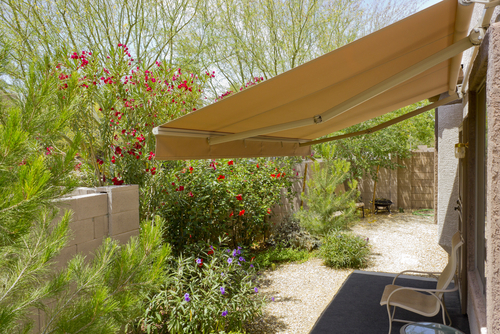
Awnings are versatile structures built onto the outside of your home above the windows. These days they are typically made of synthetic fabrics which are treated for water and mildew resistance, which greatly extends the life of your awning material.

It is also possible to have awnings built with solar panels, thus maximizing the energy efficiency of the construction. These tend to offer a more seamless look with the outside of the home, as opposed to having a few solar panels mounted to the roof. They serve the same purpose as fabric awnings, in that they block and redirect sunlight from entering into the home through the windows. However, they are storing energy at the same time for use elsewhere in your home. It is a very efficient, if sometimes costly, option.

Blinds

Custom House Plan- Window treatments

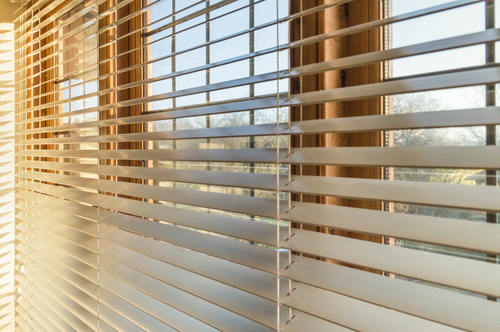
Inside blinds are affixed to the tops of windows and can be raised and lowered to adjust sunlight entering the room. Exterior blinds are usually made out of steel, aluminum, wood, or vinyl. These are also mounted atop the windows and are lowered into tracks; when the blinds are fully lowered, the slats come together to block the light. If partially raised or lowered they can help with air ventilation and indirect light levels.

As a general rule, blinds are more successful at blocking heat in the summer months than they are at keeping it in in the winter.

Drapes

Custom Home- Window Treatments

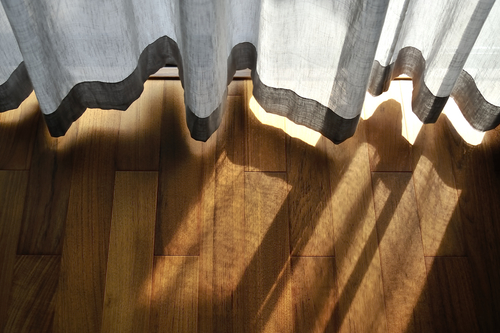
While most people will consider draperies in their decorating schemes, they often do not realize that material and aesthetic choices have a big impact on the heat levels in the room. Simply sewing a light-blocking panel to the back of each curtain can make a huge difference in summer heat reduction and winter heat retention. For maximum efficiency, drapes should be allowed to hang down to the window sill or the floor, and should be affixed to the wall at the top, thus sealing in the air between the window and the fabric.

Overhangs

Custom Home- Window treatments

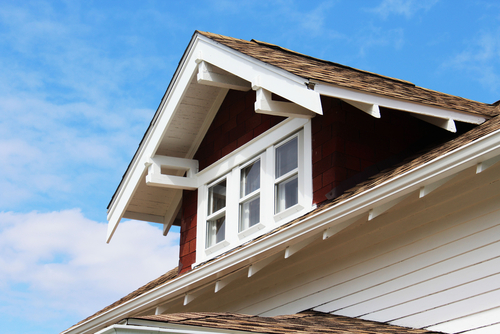
If built properly, overhangs can be one of the very best heat solutions your house can have, especially if you are working with a large southern exposure. Overhangs can direct sunlight away in summer and allow light to enter in winter, but use caution: well-designed overhangs are usually built in during the home construction process, as they require a high degree of expert knowledge to place them appropriately.

Some of the elements to consider when adding overhangs are the latitude of the property, illuminance levels, window size and type, and regional climate. When you choose a house plan that can be customized your architect can include overhangs that meet the placement requirements for energy efficiency and aesthetic appeal.


Home design has always centered around the family unit. In this way, the legacy of domestic architecture can almost be read as a social history as much as it is an industrial one. Over the decades and centuries family structures have evolved as the world has changed. Some of the classic American house plan designs reflect this changing social reality. The Craftsman, for example, was a very popular home in the early industrial stages of American suburban life and the layout reflects the changing roles for mothers working inside the home. No longer were homes owned solely by the wealthy, and the lady of the house often did not have servants to manage the previously extensive housework. The kitchen and pantry areas were restructured to be navigated by a single person, and the big open windows overlooking yard spaces also denote the multitasking that was required of these new arrangements.

House plan design almost always centers on the movements of a family through the house. As we see design evolve, it is almost always the result of changes in life movements. For the last many years the priority has been on flexible space as family structures change and roles of parents evolve. Home offices and in-law accommodations are on the rise as families adapt to new challenges and find creative solutions to their needs.

This is one of the best parts of my job: designing homes that successfully meet the needs of today’s families, and to recognize the hard work that goes into making that house plan into a home. In honor of Mother’s Day, I’d like to say thank you to all the moms out there: whether you’re a mommy or a nana; whether your family is biology-based or blended; if you have more than two generations under one roof; if you work both inside and outside the home…. thank you for filling these many structures with love and support for all the growth we all continue to do.

Families are a dynamic organization. Whether your family is growing in number or becoming smaller; whether your kids are getting older or your parents are looking to age in place; toddlers tuning into teenagers, in-laws and parents aging, family pets, job changes…. nearly any change in life can alter the demands we place on our home spaces. As the years go by we are often in a position to rethink and retool the way we move through our house, adapting to the changing needs of a life affected by many elements.

When looking for a house plan to suit the needs of a family, many people are prioritizing flexible spaces as a way to ensure that the house they choose will continue to be functional for many years. And it’s not just extra bedrooms we’re talking about here, although that is one of the easiest ways to evolve your needs: a guest room easily converts into a nursery; the home office adapts into a craft/work space with ample storage. In addition to convertible rooms, these days there are often flexible spaces built right into the house plan. This gives the buyer the ability to imagine how that space could best be utilized by their unique family.

The country-style house plan is growing in popularity- in large part because of its ability to offer such flexibility. These house plan styles stand with one foot in each of two worlds: a modern interior with loads of flexible space housed behind a classic country-style façade. This style is often denoted by its ability to prioritize functionality over traditional needs, as seen by the lacking of a formal dining room in favor of a large eating space right off the kitchen much better suited to today’s modern, multitasking family. And yet the great room echoes the traditional dramatic space perfect for celebrating holidays and get-togethers. These rooms often boast vaulted ceilings and classically functional features like built-in book shelves flanking an impressive mantle.

No matter which phase of life your family is currently in, it is important to find a house plan that can suit everyone’s needs as they grow and change. This is, in fact, why most people would choose to build their dream house over buying something already standing: who better to predict the future needs of your dynamic family but you?

Building your own dream house can be a daunting task. There are many details to see to and countless decisions to make and the whole thing can become overwhelming quickly without a good plan to guide you through the process. And when it comes to staying within your budget here are a few tips to keep your plan on track:

  1. Choose your builder carefully. This may be the most important decision you make after you purchase your house plan. This relationship will be very important through the building process and a good builder will be able to advise you on many elements of the project.
  2. Work with your architect to ensure efficient building proportions. Plywood and drywall come in sheets 4 ’ x 8’, and structural lumber often comes in 2’ increments. Consider this and other standard material measurements when fine-tuning the design of your house plan. Odd shapes and lengths have the potential to create a considerable amount of scrap- and thus wasted- materials.
  3. Utilize any discounts you can. Be savvy when it comes to purchasing supplies. See if you can use your builder’s discount. Look into remnants and left over supplies for things like flooring and countertops; a previous construction project might have created loads of left-over materials that could be perfect for your space and design.
  4. Keep the roof pitch to a maximum of the standard 8/12. The more dramatic the pitch of the roof, the higher the labor cost a construction team will be able to charge. Or, if a steeper roof is desirable, consider using more than one pitch to minimize the amount of time and materials used on these more decorative elements.
  5. Design your home for low maintenance. Consider that skimping on some materials now will cost you more in the future. Things like windows, doors, roofing materials, and foundations are places where it is advisable to choose quality over low-cost. The process of repairing or replacing these elements in the future can be prohibitively expensive; better to build your structure with quality from the start.
  6. Use fancy materials where it counts. A stonework façade is a stunning improvement to the curb appeal of any home, but can be quite costly to create. Consider that perhaps the back and sides of the house are not in quite as much need for the dressy stonework as the front. Utilize high-quality materials where they will be appreciated.

The key to a successful home building project is to stay organized and keep your visions in mind as you move forward. Taking things one step at a time and utilizing all of your resources can keep you well within your budget and minimize unexpected set-backs.


When it comes to life in your dream home, your family’s experience reaches beyond the walls of your house. Thinking about the sustainability of your landscaping and outside areas is one way to expand your living space—and save money in the process.

No matter which region of the country you live in, building systems that harvest naturally occurring resources is one of the best ways to save money each month—without sacrificing a beautiful yard.

Collecting rainwater for landscaping use is one of the oldest and simplest ways to keep your utilities bill down and maintain a stunning yard. There are some things to keep in mind as you are building to ensure that these systems can easily be implemented but, beyond that, this may be the simplest way to stretch your resources for maximum benefit.

To collect rain water you will first of all need a good collection barrel. Look around before you buy one: there are many opportunities to get these at a discount or for free from industrial companies with no further use for them.  A good gutter system is also important. You will need to have some version of a gutter filter system in place to keep the rain water separate from leaves, moss, and other debris so your water is clean and filtered.

Most people will simply run a piece of gutter material down from a drain point on the roof into a rain barrel to collect the water as it falls. Having a barrel with a spigot towards the bottom will make harvesting this collected water easy, as you can simply affix a garden hose to the opening at the base and use the collected water to hydrate your garden or lawn.

Maintaining an outside space that is both beautiful and functional for your family’s activities does not need to be expensive or taxing. By utilizing some of our naturally occurring resources you can maintain even the most complex landscaping and save money at the same time.

Here at Monster House Plans, we offer a wide selection of house plans. We know you will find one you’ll be excited about.

Check out these links for further information and how-to’s:

http://www.motherearthnews.com/diy/build-a-rainwater-collection-system-zb0z1307zsal.aspx

http://www.clean-water-for-laymen.com/collecting-rain-water.html


Back when architects were designing house plans by hand at large tilted drafting tables, a 3-D model was a luxury items usually relegated to large industrial or commercial projects. The benefit of those models, however, was paramount: having a replication of your dream project as it stands in actual space is a vital part of the process.

With countless improvements in technology, those architectural models are now available without the balsa wood and gluing processes of previous years. And this accessibility makes for a better home in the long run: from designer to builder to purchaser, having a model to work from allows everyone involved to be on the same page.

After nearly 40 years of designing homes, I am thrilled to be empowered to harness this technology. I have found that the improved clarity and transparency makes all the difference to families working on building their dream homes. This tool is of paramount importance when it comes to bridging the gap between designer and builder, and makes custom alterations a simple process.

At MonsterHousePlans.com, we offer thousands of house plans. And once you’ve searched through them and narrowed down your favorites, this 3-D Intelligent Design option allows your dream floor plan to come to life. This is an invaluable tool when it comes time to begin work with your builder: the 3-D model allows us to include the architect’s specific designs and characteristics, while giving the builder real-space awareness of how all these pieces come together. And as terms of customizing your floor plan, this is the tool that allows you to see the impact of individual choices as it translated to the house as a whole.

This industry has changed so much over the years. And while relics like the electric eraser have gone by the wayside, I am so thankful that modeling has followed us into these new methods of designing homes. There is nothing like taking an idea from your mind onto the page, and then again translating it into 3-D. It remains one of my most favorite examples of how the technological age has benefited the architectural industry: bringing real life examples of your dream home into the tangible process of everyone who buys a house plan.

– Brian Piling, architect

Every new home begins with an idea followed by a house plan. The plan may in fact be the most important aspect surrounding the completion of your dream home. Here, we will cover the differences between purchasing a stock house plan and hiring an architect to design your home.

Most people will develop a budget for their home building project that needs to be strictly managed throughout the entire process. This budget always has the potential to seem thinner and thinner as the project progresses if the planning process becomes lengthy. This can be the case especially when one hires an architect to design their home. This method certainly has its place and although appealing in theory, this route may be more expensive than finding a house plan from a vast collection that already incorporates the elements that you are looking for in a home. In fact, buying a stock house plan will save you near 80% of the final costs compared to hiring an architect. At Monster House Plans, we even offer a cost-to-build feature that provides a rough estimate of what your home will cost in your zip code area. This useful feature takes out many financial surprises during the construction of your dream home. For this reason, staying on budget is our number one advantage.

Advantages of buying a house plan:

  • Higher level of flexibility found with buying a stock house plan. They are readily available and easily accessible.
  • Budget friendly and flexible to alterations
  • No hidden costs found with making adjustments. You search through numerous plans with varying features to find the perfect plan; therefore, the likelihood of making changes may be slimmer
  • Customizable features found with some building plans publishers, such as our professional staff and on-hand architect at Monster House Plans.
  • Time saving! Purchasing a house plan shortens the amount of time it takes to acquire the plan itself.

Advantages to consulting an Architect:

  • Architects will consult with you in person and draft based on your descriptions.
  • They may add unique flair to certain elements of the house (Although these features usually increase the cost of building the home)
  • Can design with building materials in mind when possible

However, all the advantages of consulting with an Architect can be equalized depending on where you purchase the house plan. For example, Monster House Plans maintains relationships with licensed architects and designers that you can contact if you should have any questions.

Blue Prints

Although building a home is not a quick and easy process, the process of planning the home can be much simpler than imagined. Finding what works best for one’s specific needs is essential. There are now many different house plans available to anyone. The diversity in available house plans ensures that you will be able to find the right plan with all the desired elements.