
Ask 10 people in the Metroplex what a “typical” North Texas home looks like, and you’ll get 10 different answers. That’s because Dallas-Fort Worth has never been a one-style kind of market. Limestone ranch homes sit a few miles from sleek contemporary builds, and modern farmhouses share zip codes with brick colonials. For anyone planning a new build, that variety is exciting and overwhelming.
The good news? Once you know which popular house plan styles show up most often across the Metroplex (and why builders keep coming back to them), you can cut through the noise fast. Below, we’ve rounded up seven of the most popular house plans in Dallas-Fort Worth, along with the climate-smart features and layout details that make each one a strong fit for North Texas living.
1. Modern Farmhouse
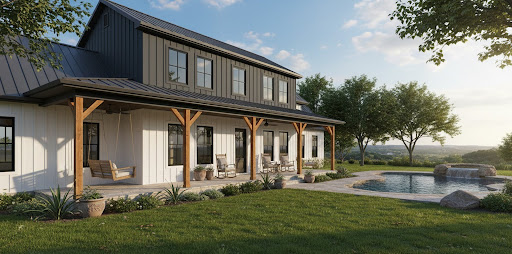
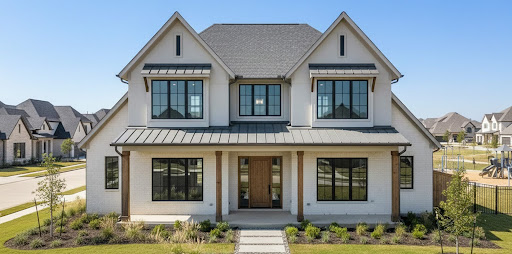
Modern farmhouse plans have dominated the DFW building scene for years, and their popularity isn’t slowing down. You’ll see them everywhere from Prosper to Mansfield, and for good reason: they pair a clean, contemporary feel with warm, livable details that families gravitate toward.
What makes a modern farmhouse plan stand out in North Texas? Open-concept living areas, large kitchen islands, board-and-batten or mixed-material exteriors, and covered porches that let you enjoy the outdoors without baking in the summer sun. Most of these Dallas-Fort Worth floor plans also feature rear- or side-entry garages, which keeps the front elevation clean for neighborhoods with strict HOA guidelines.
Why it works in DFW: The tall ceilings and open floor plans keep living spaces feeling airy during hot months, while covered front and back porches give you shaded outdoor space from spring through fall. If your lot backs up to a greenbelt or open space, a modern farmhouse plan with a large rear porch takes full advantage of the view.
2. Craftsman
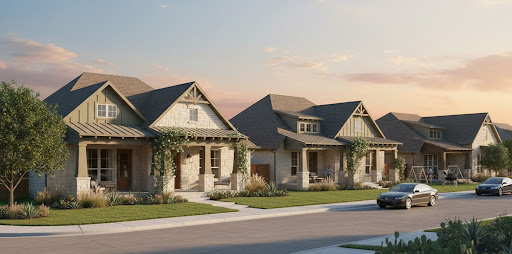
Craftsman-style house plans bring a sense of character and handcrafted detail that stands out in DFW’s newer subdivisions. You’ll recognize them by their tapered columns, low-pitched gable roofs, wide front porches, and exposed rafter tails. Inside, Craftsman plans tend to feature built-in shelving, defined living spaces that still feel connected, and thoughtful use of natural materials like stone and wood.
Craftsman plans are a strong pick for families who want curb appeal without going too ornate. Many of the best house plan styles for Texas borrow Craftsman elements because they translate well to the region’s building materials and suburban lot sizes.
Why it works in DFW: Craftsman homes sit well on the moderate-to-large lots common in cities like Keller, Southlake, and Flower Mound. The wide front porches provide shade over entryways and windows, which helps reduce cooling costs during July and August. Stone accents on the lower exterior hold up beautifully against North Texas weather, too.
3. Texas Hill Country / Ranch
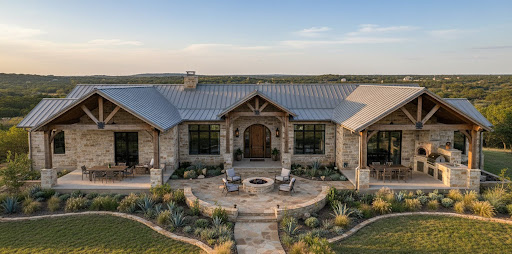
No list of popular house plan styles in Dallas-Fort Worth would be complete without the Texas Hill Country style. While this look originated further south and west, it has become a favorite across the Metroplex for buyers who want something distinctly Texan.
Texas Hill Country plans lean on native limestone exteriors, metal roofing accents, heavy timber details, and single-story footprints with wide, sprawling layouts. Large windows bring in natural light, while deep porches and overhangs shade them from direct sun. You’ll often see outdoor living rooms, summer kitchens, and courtyard-style entries in these plans.
Why it works in DFW: The single-story layout fits perfectly on the wider suburban lots found in communities like Celina, Aledo, and Midlothian. Metal roofing reflects heat and handles hailstorms better than standard asphalt shingles. And the emphasis on indoor-outdoor flow means you can use your patio space for eight or nine months out of the year.
4. Transitional (Contemporary Meets Traditional)
Transitional house plans are gaining serious traction in DFW, especially in master-planned communities. This style blends traditional forms (gable roofs, symmetrical proportions) with contemporary finishes (flat-panel cabinetry, large windows, minimal exterior trim). The result feels current without straying so far into modern territory that it clashes with neighboring homes.
Inside, transitional plans prioritize open living and dining areas that connect to the kitchen, home offices or flex rooms, and primary suites on the main level. Exterior materials typically mix brick, stone, and stucco in muted tones.
Why it works in DFW: Many DFW homeowner associations require homes that “fit the neighborhood” without specifying a single architectural style. Transitional plans thread that needle. They look at home next to Craftsman or traditional builds while still giving you a fresh, updated interior. Larger windows improve natural lighting and make rooms feel bigger, a practical advantage in the tighter lot-to-lot spacing common in newer subdivisions.
5. Mediterranean / Tuscan
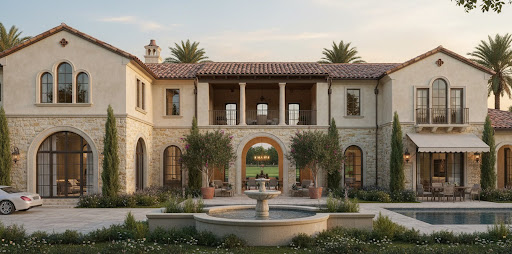
Mediterranean- and Tuscan-inspired plans still hold a strong presence in upscale DFW communities. These plans feature stucco or stone exteriors, clay tile roofs, arched windows and doorways, and interior courtyards or loggia-style outdoor spaces.
Inside, expect large gathering rooms with high ceilings, formal dining areas, expansive primary suites, and well-defined entries with dramatic foyer spaces. Many Mediterranean DFW house plans also include casita-style guest quarters or detached garage apartments.
Why it works in DFW: The thick stucco walls and courtyard layouts historically evolved in hot climates, so they perform well in North Texas summers. Clay tile roofs are durable against hail (a real concern here), and shaded courtyards create a breeze-catching microclimate that makes outdoor spaces usable even in peak heat.
6. Traditional / Colonial-Inspired
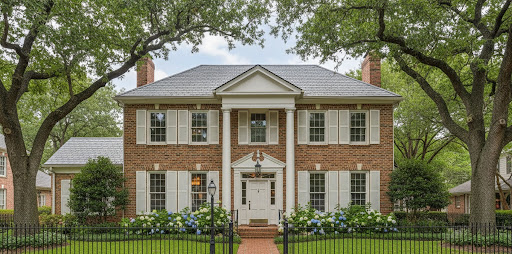
Colonial house plans remain a staple across the DFW market, particularly in established neighborhoods and communities that prioritize a classic, timeless look. You’ll find these homes throughout Plano, Richardson, Grapevine, and Arlington. They typically feature brick exteriors, symmetrical facades, shuttered windows, and two-story layouts with defined rooms.
Don’t confuse “traditional” with “outdated,” though. Today’s traditional Dallas-Fort Worth house plan styles incorporate open kitchens, larger primary suites, mudrooms, and flexible bonus spaces upstairs. You get the polished exterior of a classic home, with a floor plan that reflects how families live today.
Why it works in DFW: Brick performs exceptionally well in the North Texas climate. It withstands temperature swings, requires minimal maintenance, and stands up to the severe thunderstorms that roll through every spring. Two-story plans also make efficient use of narrower lots, which are becoming more common as DFW land values rise.
7. Modern / Contemporary
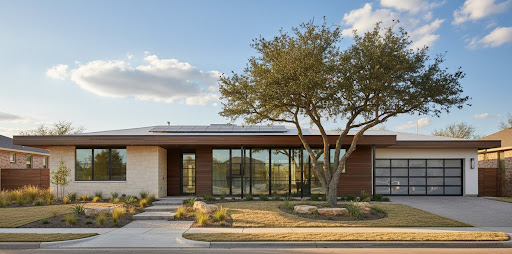
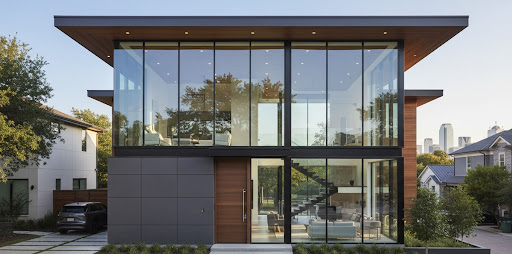
Modern and contemporary plans are the fastest-growing segment in DFW’s new-construction market. Flat or low-slope rooflines, floor-to-ceiling glass, minimalist exteriors, and open interior volumes define this style. You’ll see these homes popping up in urban-adjacent neighborhoods.
Inside, modern plans focus on clean lines, integrated storage, floating staircases, and indoor-outdoor connections through sliding glass wall systems. Minimalism drives the layout, so every square foot has a clear purpose.
Why it works in DFW: Energy-efficient building envelopes, strategic window placement for daylighting, and flat roofs designed for proper drainage all suit the Texas climate. Many modern plans also integrate smart-home wiring from the ground up, which appeals to the tech-forward buyer demographic growing across North Texas.
How To Choose the Right Style for Your DFW Build
Picking from the most popular house plans in Dallas-Fort Worth comes down to a few practical questions:
What does your lot look like? Wide suburban lots in outer-ring cities like Celina or Weatherford can accommodate sprawling single-story plans. Narrower infill lots closer to downtown may call for a two-story traditional or modern plan that builds up instead of out.
What does your HOA allow? If you’re building in a master-planned community, check the architectural guidelines before you fall in love with a plan. Some communities restrict roofing materials, exterior colors, or even the percentage of your facade that must be brick or stone.
How do you use outdoor space? Covered patios, screened porches, and outdoor kitchens are practically standard in DFW builds. If outdoor entertaining is a priority, look for plans with a strong rear porch footprint or a courtyard layout.
How important is energy efficiency? Certain styles handle Texas heat better than others. Deep overhangs, shaded porches, courtyard layouts, and reflective roofing materials all help keep cooling costs down during those 100-degree stretches in July and August.
Once you answer those questions, you’ll be ready to pick your favorite DFW house plan.
Modern Farmhouse Meets Metroplex
Take a peek at one of our modern farmhouse plans and see why they’re among the most popular house plans in Dallas-Fort Worth.
Your Future DFW Home Starts With the Right Plan
We carry thousands of house plans in every style on this list, and you can filter by square footage, bedrooms, stories, garage configuration, and architectural style to find exactly what fits your build. Every plan comes with detailed floor layouts and elevation drawings, so you’ll know precisely what you’re getting. Browse our full collection today and take the first real step toward building in Dallas-Fort Worth.